
CASE STUDY: When Legal Strategy Destroys Brand Soul
Quick Summary
The Incident: Bauer Hockey faced severe backlash after using a “bait-and-switch” tactic to obtain the personal contact details of a loyal creator, “Pavvy the Goalie”, only to issue a formal legal threat.
Psychological Fallout: This maneuver triggered “brand betrayal,” a psychological state where emotional attachment amplifies the intensity of consumer retaliation and avoidance.
Market Consequences: Competitors like Warrior Hockey capitalized on the crisis by publicly supporting the creator, effectively siphoning away loyal Bauer advocates.
Strategic Lesson: For SMEs, prioritizing rigid intellectual property (IP) enforcement over organic advocacy can destroy decades of brand equity in a single social media cycle.
When a business reaches a certain level of success, it often develops a defensive reflex to protect its intellectual property. However, branding is far more than a logo or a product line; it is a promise to its audience. When that promise is broken through deceptive communication, the resulting damage is rarely contained within a legal department.
The recent controversy involving Bauer Hockey and a TikTok creator known as Pavvy the Goalie serves as a stark warning for decision-makers. It illustrates what happens when a brand treats its most vocal advocates as adversaries. By examining the consumer psychology behind this “bait-and-switch” incident, we can uncover how SMEs can avoid similar reputational pitfalls and build more resilient, human-centric brands.
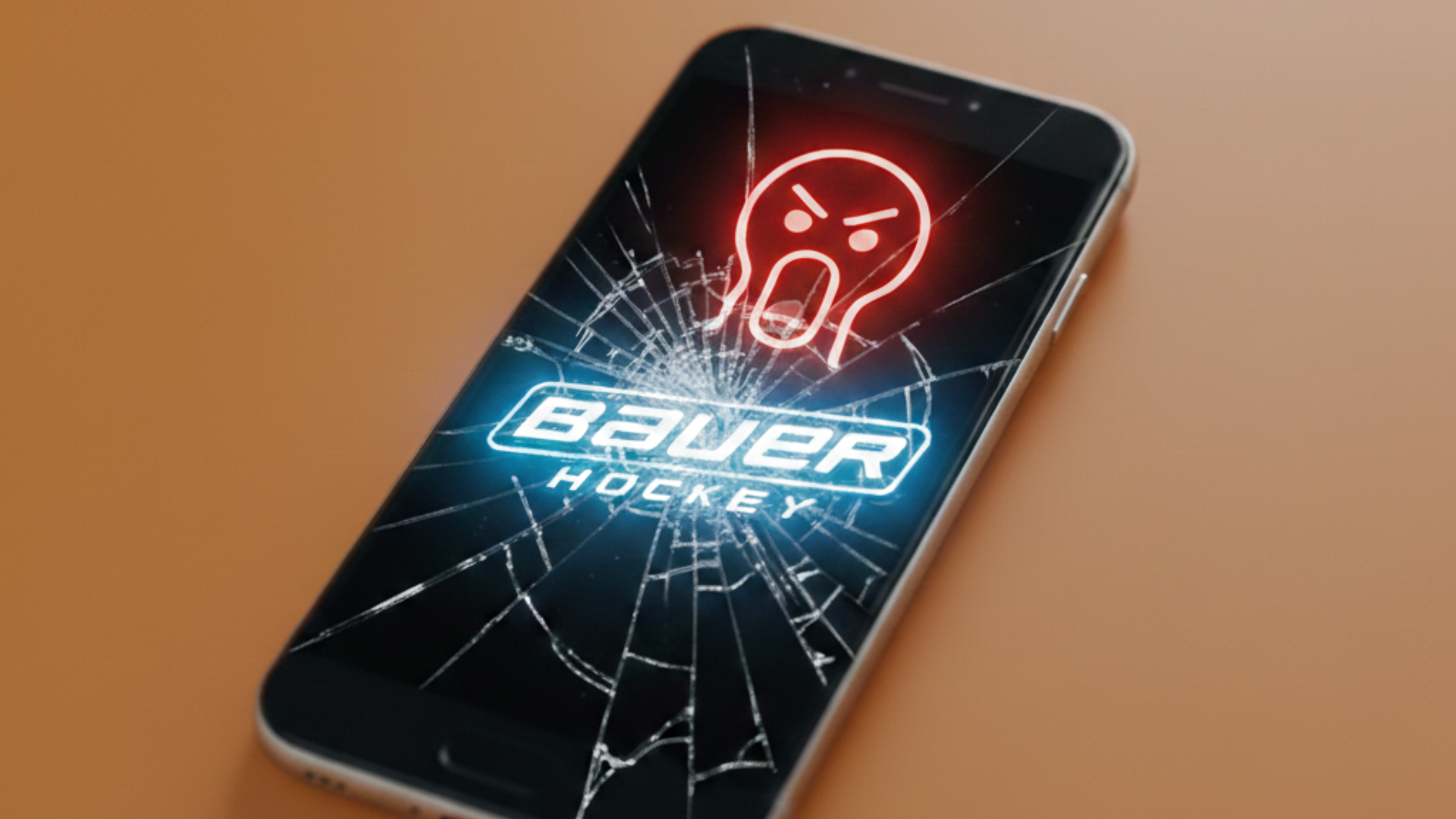
The Bauer Hockey controversy serves as a cautionary tale for decision-makers, illustrating how treating vocal advocates as legal adversaries through deceptive communication can shatter brand trust and destroy the psychological promise a business makes to its audience.
The Bauer Incident: A Breakdown of the “Bait-and-Switch”
In early 2026, Pavvy the Goalie, a creator with fifteen years of loyalty to Bauer gear, shared a TikTok video featuring products from a publicly mailed seasonal catalogue. Instead of traditional outreach, a member of Bauer's social team contacted her via DM, expressing interest in a “partnership” to secure her email address.
Once her contact details were obtained, the “partnership” was revealed to be a ruse. Bauer issued a formal legal threat, citing copyright infringement for the catalogue content she had shared. While the company likely had a technical legal argument regarding their IP, the deceptive method used to serve the notice was viewed by the community as “beyond the pale”.
The backlash was immediate: longtime customers flooded social channels with intentions to switch to competitors, and a reputational crisis ensued.
The Psychology of Brand Betrayal
To understand why the hockey community reacted so brutally, we must look at the science of brand betrayal. Research from 2024 indicates that brand betrayal occurs when a consumer believes a trusted brand has deliberately violated relational norms.
The Intensity of Emotional Bonds
Studies in 2025 show that consumers with the strongest emotional attachments — your superfans — experience the most intense feelings of betrayal when a brand acts unethically. Because these individuals have integrated the brand into their self-identity, a perceived rug pull feels like a personal attack. This leads to:
Active Retaliation: Public complaints and mobilizing others to boycott.
Brand Hate: An emotional state that triggers long-term avoidance-like or attack-like strategies.
Generalized Skepticism: Particularly among younger demographics, who view such tactics as a violation of brand transparency expectations.
Why “Protecting the Brand” Can Kill the Brand
For many SMEs, the instinct to protect internal branding and assets is strong. However, a values-based crisis, where a brand violates its perceived character, is far more damaging than a performance-based mistake.
The Advocate Paradox
Pavvy represented organic advocacy, the most valuable form of marketing for businesses.Research from 2025 highlights that satisfying consumers is critical for enhancing brand advocacy, which helps firms attract new customers at lower costs. By treating an advocate as a legal threat, Bauer prioritized a temporary hold on public imagery over a decade-long relationship.
When the “soul” of a business (its mission and values) becomes disconnected from its customer experiences, the result is messaging drift. Consumers today are more likely to develop relationships with brands that share their values; when those values are revealed to be deceptive, purchase intent and advocacy vanish.

Prioritizing rigid asset protection over organic advocacy can trigger a values-based crisis that disconnects a business’s mission from its customer experiences, ultimately destroying the purchase intent and brand equity built through long-term relationships.
The Competitor's Easy Win
A brand audit often involves analyzing the competitive landscape to identify gaps in the market. In this case, Bauer's competitors did not need a complex brand identity audit to find an opening.
Warrior Hockey quickly moved to support the creator, leveraging the situation to showcase their own company culture as one that values its community. This demonstrates a key brand strategy: your weaknesses are your competitor's greatest opportunities. By simply being human, where a larger corporation was legalistic, competitors were able to win over displaced Bauer loyalists.
Building Resilience: Actionable Strategies for Decision-Makers
We can only watch and wait to see how this will affect Bauer in the long run. But in the meantime, to ensure your brand remains a beloved business rather than a cautionary tale, we recommend the following steps:
Align Legal and Marketing: Ensure your legal team understands your brand's voice and personality. A cease-and-desist should not be the first interaction with a fan.
Prioritize Transparent Communication: If a creator shares something sensitive, a polite DM explaining the situation is often enough. Lying to secure contact details is a statistically significant trigger for trust decline.
Conduct Regular Health Checks: Use a brand audit process to identify if your external branding (how you treat customers) is in sync with your internal values.
Value Authenticity Over Control: In the creator economy, you cannot control every piece of content. Invest in organic relationships rather than rigid IP enforcement.
Conclusion: The Path to an Unforgettable Brand
Building an unforgettable brand is about nurturing a universe where your customers feel at home. As the Bauer controversy shows, that home can be destroyed if the guiding principles of the business are sacrificed for short-term control.
True brand equity is built on trust, consistency, and a deep understanding of human behaviour. When you treat your audience with fairness and transparency, you don't just protect your brand; you make it unforgettable.
If you're ready to protect your brand equity and build deeper resonance with your audience, discover our full range of strategic branding services here.
Get more updates from Ainoa in your Google News feed.
Articles on our blog may contain content drafted with the assistance of AI tools, always reviewed and polished by Ainoa's team.
