Startup Branding Services: When They're Worth It, When They're Not, and How to Choose
Most startups either spend money on branding too early or wait until the damage is already expensive to fix. Here's how to know the difference and what to look for when you're ready.
If you're searching for startup branding services, you're probably in one of two places: you're building something ambitious and you know the brand needs to be right, or you've already launched, and something isn't connecting. Either way, we know from experience that you need strategic clarity, not just a logo.
We're going to be honest with you upfront, because that's how we operate at Ainoa. Not every startup needs branding services. Some businesses are way too early, and honestly, some don't have the kind of growth ambitions that justify the investment. And the branding industry isn't always great at telling you that.
This article will help you figure out whether startup branding services are worth it for your business right now, what you should actually expect from them, and how to choose the right partner if you're ready.
Do You Actually Need Startup Branding Services Right Now?
Here's the uncomfortable truth: a lot of startups that invest in branding are too early for it.
The signs are fairly consistent: you're still figuring out what you actually sell; you have multiple product ideas branching in different directions; your MVP isn't clearly structured yet; or maybe you don't have a firm answer to the basic question of what your company does and for whom.
If that sounds familiar, professional branding services probably aren't the right investment today. What you have (a DIY logo and some colors) is likely enough to get started, and that's fine.
There's another category too: microbusinesses that don't have ambitious growth plans. If you're a local plumber employing yourself and a few buddies, a small home bakery with no plans to open a storefront or expand into e-commerce, you might never need strategic branding in the formal sense. A simple text logo, a couple of colors, and a clean presence is genuinely sufficient. There's nothing wrong with that, and any honest agency should tell you so.
When branding investment starts to make sense
Branding becomes a serious consideration when the business itself is serious. The signals we see most often:
You're seeking funding or investors: A brand strategy isn't just a nice-to-have for your pitch deck; it's a core component of your business plan. Investors want to see that you understand your market, your audience, and your positioning. The visual identity can be early-stage at this point (even Airbnb's early pitch decks had rough visuals), but the strategic thinking behind the brand needs to be rock-solid.
You're planning to enter retail: Whether you're targeting Walmart, Whole Foods, or a chain of independent boutiques, retail buyers evaluate brands, not just products. Your packaging, your story, your positioning — these are the things that get you shelf space and keep you there.
You believe your product can capture significant market share: If your ambitions go beyond serving a small local customer base — if you're thinking about multiple locations, franchising, e-commerce expansion, or category leadership — then your brand is commercial infrastructure that needs to be built properly.
Your current brand is actively holding you bac: You're attracting the wrong customers, your team describes the business differently depending on who's talking, or maybe your marketing is active, but conversions aren't following. These are structural brand problems, and they get more expensive to fix the longer you wait.
The key principle is this: branding is a strategic asset. Logos and colors are just the visual output of that strategy. If you have clear, ambitious growth plans and a defined direction, investing in branding early is one of the smartest decisions you can make, because it's far more expensive to go back and fix broken foundations than to lay them correctly from the start.
What Founders Get Wrong About Branding
The single biggest misconception we encounter is that branding means logos and colors.
Strategic branding is fundamentally about understanding your market, your audience, and the psychology of why people buy. It means identifying who you're talking to, how to reach them, what triggers their purchasing decisions, and how to influence those decisions ethically and effectively through positioning, messaging, and design.
When you invest in proper branding, you're getting the strategic foundations for your entire business, not just a visual identity. Everything you build afterwards — your marketing campaigns, your sales materials, your product development, your hiring — sits on top of those foundations. If the foundations are wrong, everything built on them will have gaps. And fixing that retroactively is significantly more costly than doing it right from the start.
The second misconception is the opposite extreme: thinking that every stage of business requires polished branding. It doesn't. Early-stage startups can — and often should — operate with minimal visual branding while they prove their concept. What matters even at the earliest stage, however, is strategic clarity: knowing who you serve, what you offer, and why it matters.

What a Comprehensive Startup Branding Package Should Include
Not all branding services are the same, even though it might seem like it. At the low end, you'll get a logo, some colors, and a font selection without any strategic justification. At the high end, you'll get a complete strategic and creative foundation for your business and all possible assets from video intros to sound logos and beyond. Understanding the difference matters, because what you're paying for isn't pixels — it's the thinkingbehind them.
Here's what a serious, comprehensive startup branding package looks like. At Ainoa, our complete brand transformation typically runs 8–16 weeks, depending on complexity and feedback timelines, and includes:
Research and intelligence: Consumer psychology research, proprietary empathy mapping, market analysis, competitor profiling, and audience research. If needed, we run tests to validate whether your product resonates with the target audience — including testing design directions and product features. We never guess. We have access to market research databases that cost thousands per study, and we use them.
Brand strategy: Your positioning, USPs, brand storytelling, personality, tone of voice, communication frameworks, archetype definition, full brand narrative, and how to pitch the brand to investors, retailers, and customers.
Visual identity: Logo system, typography, color palette, imagery direction, illustration direction, and creative guidelines — all built as a direct expression of the strategy, not as decoration.
Brand playbook and guidelines: A comprehensive, practical document that defines everything the brand is. Your team, your suppliers, your future hires — everyone works from the same playbook.
Commercial infrastructure: This is where many agencies stop, but for startups, the commercial application matters. Our basic package includes a Shopify store build or optimization (through our partner agency) and/or primary packaging design with master templates. Typically, a Shopify build comes with high additional costs from a separate provider — bundling it means you're getting substantially more value from a single engagement.
Post-launch support:This is something founders consistently tell us matters. You shouldn't receive your brand files and then be left on your own. Our packages include post-delivery support calls where you can ask questions, get direction, and make sure you're implementing everything correctly.
One thing we're deliberate about is building brands that aren't too rigid. We know from experience that startups pivot. You might launch a new product line, target an additional audience, or shift direction entirely. A lot of agencies and designers build brands that look great today but become limiting the moment anything changes. We design for flexibility from the start, so your brand can grow with you rather than constraining you.
The brand strategy workshop alternative
Not every startup needs a full brand package with all the bells and whistles. If you have an internal creative team that can handle design execution or another designer in mind, or if you need strategic clarity fast (for a funding application, for example) a focused brand strategy workshop can be the right move.
Our workshop is a one-day intensive where we work through your positioning, audience, key offer, and strategic direction together. You leave with a clear strategic framework that your team can build on. For startups that need clarity for investors and can't wait 8–16 weeks, this is often the smartest entry point. We can even build a pitch deck as an additional deliverable if needed.
Both services include post-delivery follow-up, because strategic work only has value if it's implemented correctly.
How Psychology-Driven Branding Changes the Outcome
Sales and marketing are, at their core, applied psychology. To sell effectively, you have to understand how humans make decisions — not at a surface level, but at the level of identity, culture, memory, and emotional need.
Most agencies consider the basics: demographics, personas, maybe some psychology-based strategies like utilizing social proof. Testimonials are social proof, for instance, and most marketing consultants know that. But that's a surface-level application of a much deeper discipline.
At Ainoa, our team includes psychology graduates, linguists, designers, marketing strategists, and business strategists with MBAs. We bring an understanding of human behavior that goes beyond demographic profiles and basic “needs and fears” personas that often have cringeworthy names like “Morning Method Melinda”. We understand how identities form, what cultural and social factors influence decision-making, how memory and emotion interact with brand perception, and what actually drives someone from awareness to purchase.
The practical difference is that the standard personas tell you that your target customer is a 28-year-old woman who likes yoga and sustainability. Psychology-driven strategy tells you why she chooses one brand over another, what emotional need your brand fulfills, and exactly how your messaging, packaging, and experience should be structured to make her feel that your brand was made for her.
This isn't abstract theory, but it directly affects your conversion rates, your customer acquisition costs, and your ability to build genuine loyalty rather than transactional relationships.
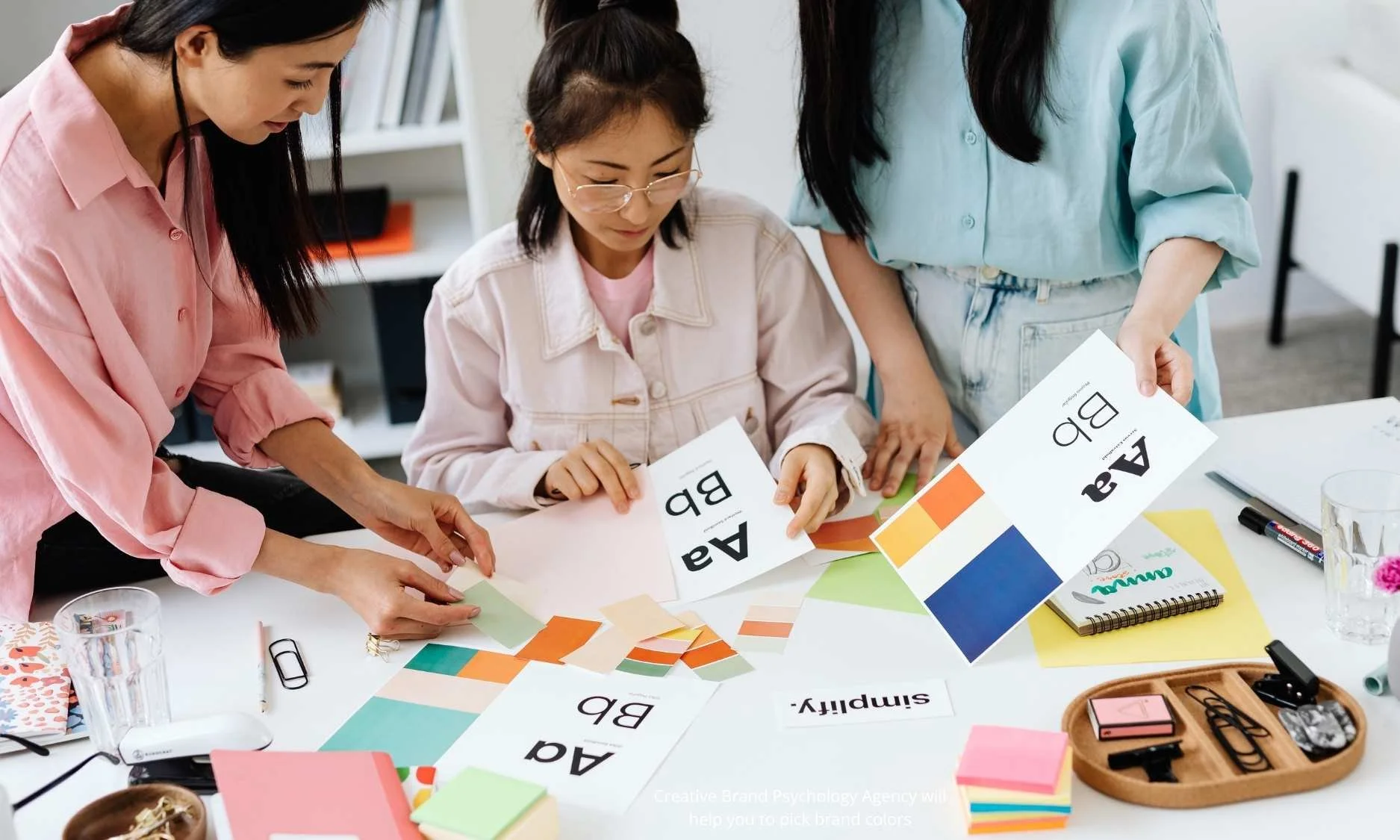
Brand colors and fonts should not be picked based on trends or personal preferences but on psychology and overall brand strategy.
How Much Do Startup Branding Services Cost?
Let's talk honestly about pricing, because founders deserve transparency here.
The budget end ($50–$500): You'll get a logo, maybe some colors and fonts, assembled based on what looks good or what's trending. In the age of AI-generated design, there's a real risk that what you receive closely resembles existing brands — which means potential legal exposure on top of a brand that doesn't differentiate you. For microbusinesses in industries where branding isn't a primary competitive factor (a small local service provider, for instance), this can be perfectly adequate. Know what you're getting, and you'll be fine.
The lower mid-range ($3,000–$9,000): You'll typically get some basic-level strategic thinking — rough competitor profiles, basic personas with demographic data, some positioning, along with visual identity work. This can be a reasonable starting point for startups that need to get moving but aren't yet at the stage where deep strategic work is worth the investment.
Comprehensive, strategy-led branding (varies by scope): This is where agencies like Ainoa operate. You're paying for genuine expertise: in-house business strategists who understand startup and scale-up challenges, psychology-informed consumer research, and a brand build designed as commercial infrastructure. The value is substantially higher because you're getting strategic direction alongside creative execution, and in our case, bundled deliverables (like a Shopify build or packaging design) that would cost significantly more if procured separately.
We use milestone-based payments, so you're not paying everything up front. And if you have investors in mind, we're happy to provide a professional evaluation or statement explaining why the branding investment is necessary — so you don't have to try to pitch something in jargon you're unfamiliar with. You can view our current pricing on our branding services page.
The key question shouldn’t be “what's the cheapest option?”, but “what does my business actually need right now, and what will the cost be if I get this wrong?”.
When Cheap Branding Works and When It Causes Real Damage
Affordable branding packages from platforms like Fiverr or template marketplaces are genuinely fine in specific situations. If you're a microbusiness, if you're in an industry where brand identity isn't a primary competitive factor, if you're a local service provider who just needs something clean and professional to get started — go for it. A $50 logo can serve you perfectly well.
But if you're an ambitious startup looking to secure investment, enter retail, expand to multiple locations, franchise, or build a consumer brand that competes on identity and resonance (which is most consumer brands targeting Millennials and Gen Z), cheap branding can actively damage your business.
Here's what goes wrong:
You attract the wrong customers — or nobody at all: Without strategic positioning, your brand communicates to the wrong audience or fails to communicate anything meaningful, which directly affects revenue.
Your brand can't scale: A logo and color palette designed without strategic thinking behind them will crack the moment you launch a new product, enter a new market, or need to speak to an additional audience segment.
Legal risk: AI-generated logos and template-based designs from Canva carry a real risk of similarity to existing trademarks. A professional agency conducts thorough checks to ensure what you end up with is genuinely yours. A $50 Fiverr logo doesn't come with that assurance.
The rebrand tax: Getting branding wrong early doesn't just cost you the initial investment — it costs you the rebrand later, which is always more expensive because you're unwinding decisions that have already been baked into your marketing, packaging, customer perception, and internal culture. You might need to start completely from the beginning, which can be daunting and time-consuming.
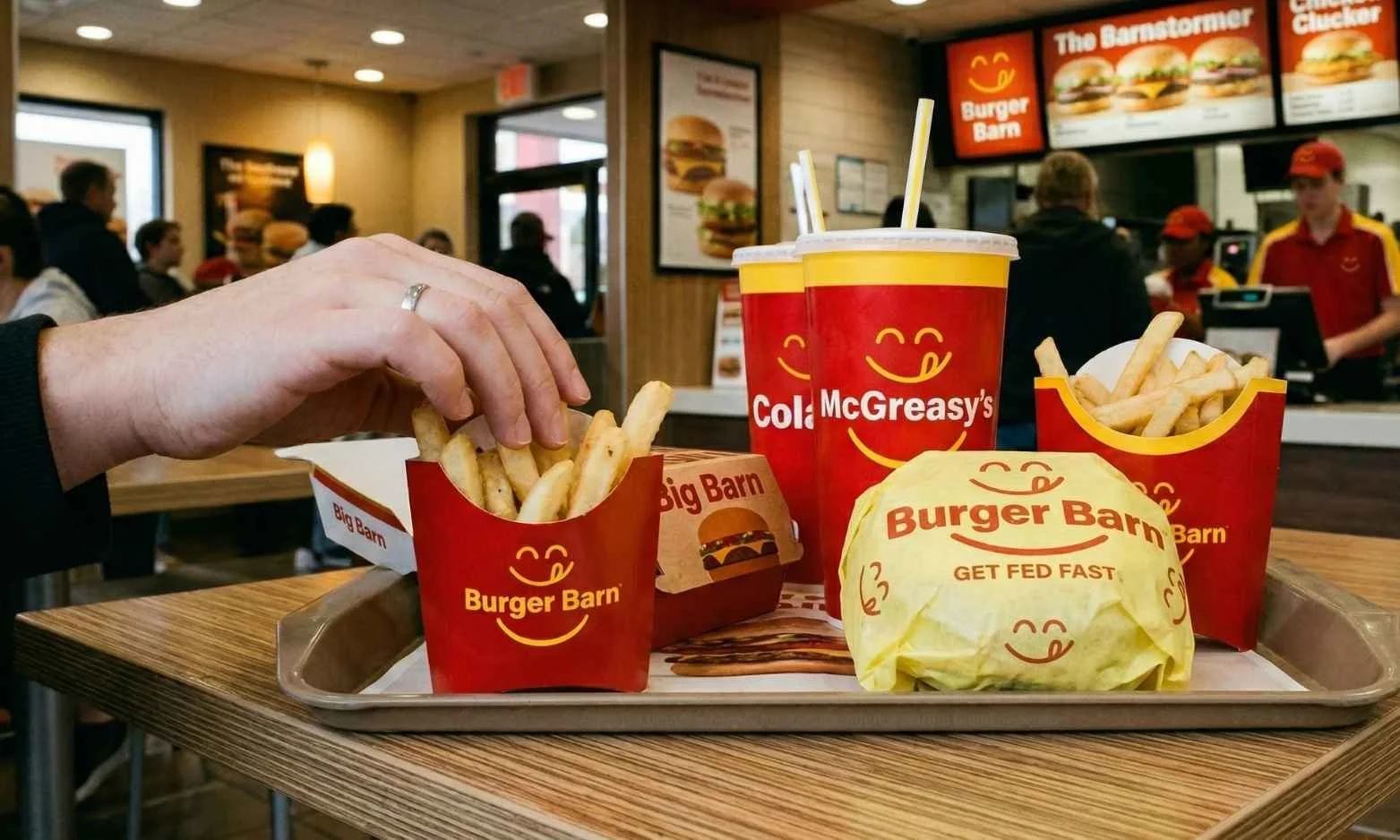
AI or LLMs will always produce “the most likely outcome”, not an original idea. Using AI design you might risk a law suit. Picutred an AI-generated fast food brand that might look familiar.
How to Choose a Startup Branding Agency: What to Ask and What to Avoid
Questions to ask before hiring
“How do you consider the end customer in your process?” This is the most important question. If the agency's process starts with your preferences rather than your customer's psychology and behavior, the brand will reflect your taste, not your market.
“How does the brand strategy account for long-term growth and scalability?” You need a brand that works today and still works when you've doubled your product range or entered a new market. If the agency can't articulate how they build for flexibility, that's a concern.
“What happens after you deliver the files?” Post-launch support separates agencies that care about outcomes from agencies that care about throughput.
Red flags to watch for
They say yes to everything: A good branding partner challenges your assumptions with evidence and logic. If they're nodding along to every brief without pushing back, they're prioritizing your approval over your results.
They don't understand how businesses work: Brand strategy doesn't exist in a vacuum. Your agency should understand startup economics, scaling challenges, and the commercial context your brand operates in, not just design trends.
Their portfolio covers everything and anything: An agency that brands restaurants, law firms, dentist clinics, tech startups, bike rentals and fashion brands with equal enthusiasm probably doesn't have deep expertise in any of them. Look for relevant case studies and a clear indication of which industries or client types they specialize in.
They charge too much for what you need or not enough: If you genuinely just need a logo and color palette, you shouldn't be paying thousands. But if you have ambitious growth plans, a few hundred dollars isn't going to get you the strategic work that makes the difference. Pricing should match the scope.
They upsell aggressively: If an agency inflates your original brief and starts selling you services you didn't ask for and don't need, they're optimizing for their revenue, not your outcomes. A trustworthy partner recommends what you actually need and is honest when something isn't necessary.

Apex Pro’s visual brand identity was built on a significant market gap.
Case Study: How Strategic Branding Helped a Pre-Revenue Startup Secure Funding
When Apex Pro, a Finnish golf startup, came to Ainoa, they were in a situation we see often: the founder had a clear vision and genuine passion, but the business was branching in too many directions. The offer wasn't focused, the brand identity was DIY, and the strategic foundations weren't in place.
Through consumer psychology research and market analysis, we identified a clear market gap: younger generations were looking for a golf experience that was more inclusive, values-driven, and personally expressive — and no established brand was serving them. This insight didn't just shape the brand; it positioned Apex Pro as a category leader from day one.
We helped focus the business direction, built a complete brand strategy and identity, and provided the kind of strategic documentation that investors need to see. The result: Apex Pro secured funding as a pre-revenue startup. We supported the application directly by providing a professional assessment of why the branding investment was necessary, what the outcomes would be, and how the brand positioned the company for growth.
Apex Pro is now preparing for full launch after a successful pre-launch with a brand that's scalable, strategically grounded, and built around real audience insights rather than assumptions.
What Makes Ainoa Different for Startups
We built Ainoa to solve a specific problem: the disconnect between brand strategy and creative execution that most agencies treat as separate workstreams.
Psychology is the starting point, not an afterthought:Our strategists hold degrees in psychology, linguistics, and business. We research the psychological and social triggers of your audience before we touch the strategy or design. When the brand is rooted in how people actually think and behave, it resonates by default.
We understand business, not just branding: Our team includes business strategists who understand the specific challenges of startups and scale-ups, from funding applications to retail entry to operational scaling. Your brand strategy is built inside your business reality, not separate from it.
You get more than just brand files: Our packages include commercial infrastructure — a Shopify store build or packaging design — that would typically require a separate engagement with a separate provider. This means less coordination, lower total cost, and a result that's strategically consistent from strategy through to shelf.
We're honest about whether you need us: We turn away startups that aren't ready for branding. We tell microbusinesses when their current branding is sufficient. We'd rather build a relationship based on trust and work with you when the timing is right than take your money when it isn't.
Post-launch support is included, not upsold: Every engagement comes with follow-up calls so you can ask questions, validate decisions, and make sure you're implementing the brand correctly. For brands we've worked with, we also offer fractional brand management, which combines CMO and brand manager expertise to protect your investment over time.
Frequently Asked Questions
Q: What is a comprehensive branding package for a new company?
A: A comprehensive branding package includes more than just a logo and visual identity. It should include market and audience research, brand strategy and positioning, messaging and tone of voice, visual identity design, brand guidelines, and ideally commercial application (such as web store setup or packaging). The goal is to give you a complete strategic and creative foundation that your team can build on. See what Ainoa includes →
Q: How do startup branding services improve customer acquisition?
A: Strategic branding directly affects how your target audience perceives, trusts, and chooses your brand. When your positioning, messaging, and visual identity are built around genuine audience psychology (not assumptions, guesses or personal opinions) your marketing becomes more efficient, your conversion rates improve, and you attract customers who are genuinely aligned with what you offer. The result is lower acquisition costs and higher lifetime value.
Q: How often do startups fail because of poor branding?
A: While startup failure is rarely attributed to a single factor, branding problems are frequently a contributing cause. A brand that can't communicate its value clearly struggles with customer acquisition, investor confidence, and team alignment. The most common branding-related failure mode isn't a bad logo, but a lack of strategic clarity about who the company serves and why they should care.
Q: How do I know if I'm ready for a branding agency vs. a DIY solution?
A: If your business has ambitious growth plans, like securing funding or investors, retail, expansion, significant market share — professional branding is likely worth the investment. If you're a microbusiness without any expansion plans or a very early-stage startup still thinking about your core product or service, a clean DIY brand is perfectly adequate. If you're unsure, an honest consultation with a reputable agency should help you figure out which category you're in without any pressure to commit.
Q: Can I get branding done in stages rather than all at once?
A: Yes. A brand strategy workshop, for example, gives you the strategic foundation in a single day, which your team can then execute on. A full brand transformation is a deeper engagement over 8–16 weeks. And if you need specific services — just a tone of voice guide, or just packaging design — most agencies offer those individually. The right approach depends on your budget, your team's capabilities, and your timeline. View Ainoa's branding service options →

Consistent, well-executed branding can improve revenue by an average of 23% compared to those with inconsistend branding and effective rebranding can directly correlate to dramatic increases in leads, with some cases showing up to 700% more sales enquiries. Pictured rebranding for the Chutney Castle.
Ready to Figure Out Whether Branding Is the Right Move for Your Startup?
Book an honest consultation with Ainoa. It's free, and it's worth your time regardless of whether we end up working together. We'll tell you where your brand stands, whether investment makes sense at this stage, and what the smartest next step is for your specific situation.
No sales pitch (we only send a pitch after the call if it makes sense for both of us), just straight talk from people who understand both branding and business.
Get more updates from Ainoa in your Google News feed.
Articles on our blog may contain content drafted with the assistance of AI tools, always reviewed and polished by Ainoa's team.