
How a Pile of Fake Money Made a Beauty Brand More Trusted Than Ever
Quick Summary
Strategic Disruption: The Ordinary’s "Secret Ingredient Store" challenged industry norms by visually exposing the 61% price markup typically added for celebrity endorsements, contrasting it with the true cost of clinical ingredients.
Action-Based Authenticity: Trust was built not through slogans but through tangible verification — using physical installations (stacks of "wasted" cash) and on-site scientists to prove the brand prioritises product quality over influencer hype.
Consumer-Centric Value: The campaign succeeded by validating a specific consumer frustration (inflated beauty pricing) and offering a clear solution: high-efficacy products without the "fame tax."
Long-Term Consistency: The event reinforced The Ordinary’s decade-long commitment to transparent pricing, proving that brand authority is sustained by aligning every business decision (from packaging to pop-ups) with core values.
In April 2025, The Ordinary faced a different kind of challenge — not a product failure or a customer complaint gone viral.
Instead, the skincare brand confronted something more fundamental: an entire industry built on inflated costs, celebrity endorsements, and misleading customers.
Rather than compete within these broken systems, The Ordinary chose to expose them.
What happened next became one of the most celebrated examples of authentic brand positioning in modern marketing. Ordinary’s pop-up store in New York City's SoHo neighbourhood was far from traditional advertising; It turned a criticism of the beauty industry into something customers could experience for themselves. The campaign sparked global conversation about pricing transparency, marketing ethics, and what authenticity genuinely means.
The “Secret Ingredient Store” generated millions of social media impressions and earned widespread praise for exceptional brand integrity. It proved that standing out from the crowd doesn't require celebrity faces or inflated budgets — it requires the courage to challenge industry norms and genuine commitment to consumer honesty.
So, how did a pile of fake dollar bills become a testament to brand reliability? What lessons can other companies extract from this remarkable approach to market disruption?
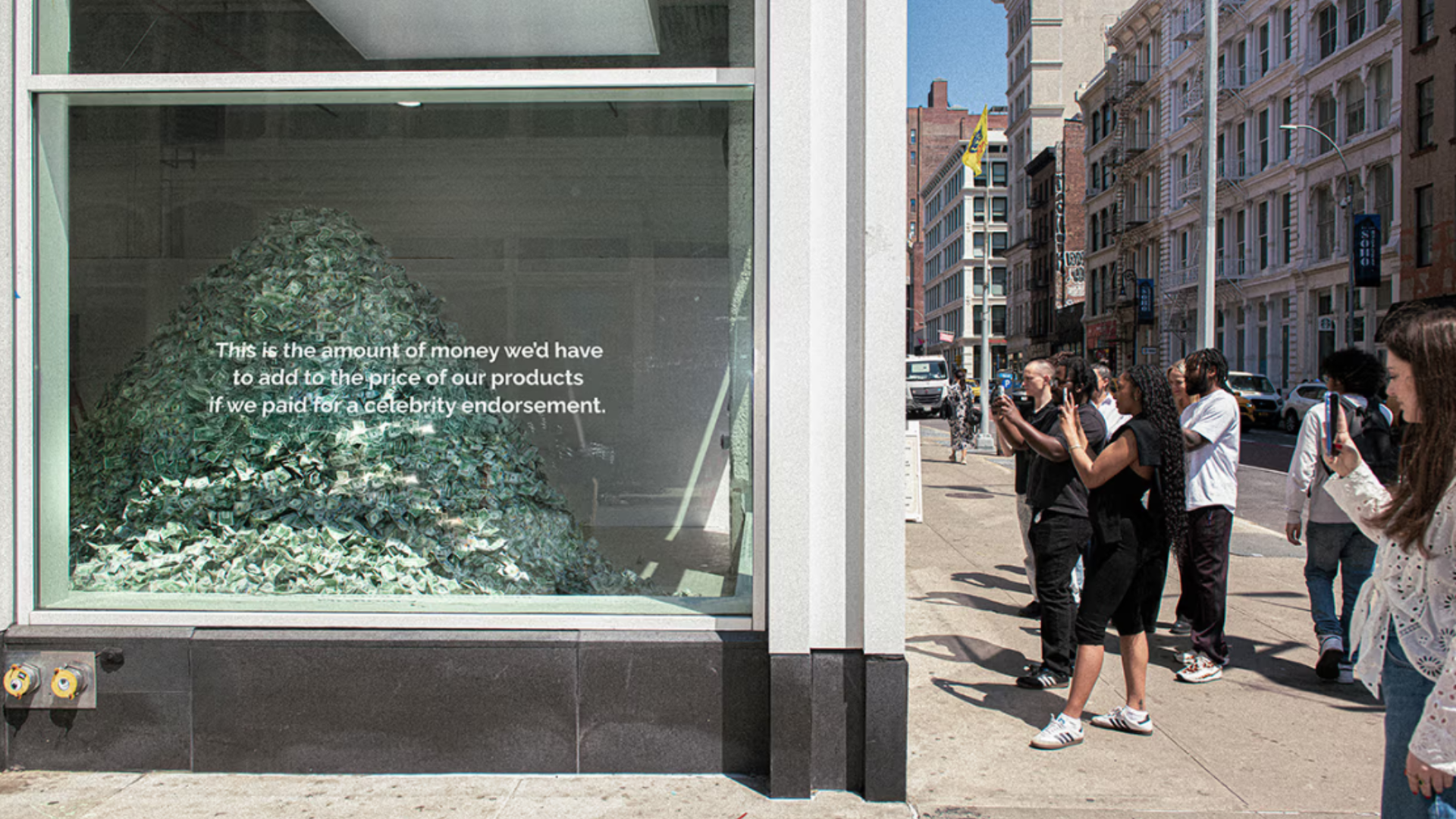
In 2025, The Ordinary turned a pop-up into a global statement, proving honesty is the ultimate marketing strategy.
Part 1: How the Beauty Industry Lost Trust
A System Designed to Keep Prices High
The Ordinary launched in 2016. This was at a time when influencers were becoming the new celebrities for makeup brands. Brands like Morphe made influencers their main models, whereas companies like Tarte flew influencers on lavish trips to promote their products.
It became normal for influencers to work with brands launching their own products in stores like Ulta and Sephora. Influencers told people what to buy and why. But this system was establishing a new way to keep prices high and consumers in the dark.
Cosmetic brands were typically investing 30% to 100% more in products to cover celebrity endorsement costs than they spent on actual clinical ingredients. A single post from a celebrity could cost $10 million. Brands used this to justify luxury prices, making good cosmetics too expensive for most people.
The industry had normalised this approach, and soon celebrity/influencer endorsements became necessary instead of optional. Famous names and aspirational imagery came before quality products or ingredients. And as influencers got more popular, they started charging more too.
Research by Mintel showed the problem clearly; While 66% of American beauty buyers prioritised high-quality products regardless of price, only a fraction of brands offered both quality and fair prices. Most maintained premium pricing despite their ingredients not being able to match those prices.
This created the perfect opportunity for The Ordinary to step in and change the rules of the game.
Part 2: The Pop-Up That Told the Truth
Breaking Industry Conventions
Fast forward to a weekend in April 2025, The Ordinary opened The Secret Ingredient Store at 433 Broadway in New York's SoHo neighbourhood.
The store wasn’t really for selling. It was for telling a story the beauty industry didn’t want told.
Walking past the window, customers encountered something unexpected: stacks of fake dollar bills filling the entire display. Beside them, a simple message: "This is the amount of money we would have to add to the price of our products if we paid for a celebrity endorsement."
The figure represented approximately $10 million—the cost some celebrities charge for a single social media post.
Inside, products had two prices side-by-side. One serum showed: "Without a celebrity endorsement, £6.99. With a celebrity endorsement, 61% more."
Every display was like this. Customers could visualise exactly how much of their money funded celebrity partnerships versus actual clinical ingredients.
Why It Felt Real
The store worked because The Ordinary did what they said it would do.
The Ordinary didn't simply criticise celebrity endorsements from a distance. The brand demonstrated its values through actions:
Genuine product consultation: The Ordinary stationed actual brand scientists and skincare experts offering free skin analysis and tailored skincare routines for visitors.
No pretence: The pop-up's design matched The Ordinary's actual brand aesthetic—minimalist and scientific.
Resource investment: The campaign had time, money and effort put into it to make it good.
Limited duration: It was only open for a weekend, so it felt special and unique rather than overselling or commercialising the message.
The Ordinary's pop-up succeeded because it matched the boldness of its message. The brand didn't simply claim to oppose celebrity culture, but it demonstrated this opposition through resource allocation and genuine engagement.
What They Really Fixed
The genius was understanding the real customer frustration. The issue wasn't merely that celebrities/influencers featured in advertising. The real problem was dishonesty about costs and motivations.
When prices jump 61% to pay for a celebrity who doesn’t use the product, customer trust disappears. The Ordinary made this trade-off impossible to ignore, turning an abstract business choice into a physical stack of cash people could see and understand.
This wasn’t about being against celebrities. It was about being for the customer. The Ordinary's point is simple: the cost of a celebrity's fame should not become a line item on a consumer's receipt for essential products.
The pop-up reframed the debate: it wasn't anti-celebrity, but pro-customer transparency.
Part 3: Why This Strategy Worked & How You Can Do It
Trust Is Built on Actions, Not Words
The Ordinary succeeded because customers could check the products, compare prices themselves, and talk to the scientists about their personal skincare issues. This honesty built trust.
Research on authenticity in marketing reveals that consumers trust actions more than words. When a brand's behaviour aligns with stated values, it builds credibility that withstands competitive pressure and market volatility.
The Ordinary couldn't claim to be affordable and charge luxury prices. By selling good ingredients at fair prices—and then documenting exactly why this was possible—they proved they meant what they said.
The Power of a Memorable Experience
The pop-up store built on what modern customers want: an experience, not just a transaction. The physical shop experience of The Secret Ingredient Store leaned into modern consumer preferences for memorable interactions over transactional exchanges.
The Secret Ingredient Store appeared during a period when The Ordinary was expanding its product line and retailer presence. Instead of using celebrities/influencer endorsements, The Ordinary chose this moment to reinforce core brand values.
Rather than simply publishing a white paper about celebrity endorsement costs, The Ordinary decided to build an installation that invited participation and generated conversation. They made an immersive brand experience that built loyalty beyond surface-level engagement.
Consumers who interact with brands through memorable moments develop stronger emotional connections and higher lifetime value. The Ordinary’s physical stacks of dollar bills created an arresting visual that not only photographed beautifully for social media but also had customers who visited the store became brand advocates, sharing images and testimonials with their networks.
This organic buzz was worth more than any ad. People trust recommendations from friends more than ads from brands. Earned media (PR) can only bring a brand a certain level of credibility; audiences trust content generated by peers more than branded messaging.
Moreover, The Ordinary's activation succeeded partly because it was entirely aligned with everything the brand had communicated previously. Successful market disruption requires consistency. Companies must communicate the same values repeatedly across multiple touchpoints until audiences internalise them.
Turning Criticism into Trust
If you’re a marketing lead or a business owner, you might have heard of a marketing term called the "service recovery paradox," first coined by McCollough and Bharadwaj (1992). It means that if a company fixes a problem really well, the customer ends up liking them more than if the problem never happened.
The Ordinary used this idea proactively. By admitting the beauty industry had an honesty problem (and offering a real solution), they made themselves look more trustworthy than anyone else. By acknowledging the beauty industry's dishonesty, The Ordinary positioned itself as having higher standards than the market baseline.
Customers who had felt tricked by other brands now found one that validated their feelings and offered something better. This created loyalty stronger than could be built through conventional marketing.
Avoiding Common Mistakes
The Ordinary's approach succeeded partly because it avoided mistakes that other brands often make:
No empty promises: The Secret Ingredient Store had substance. They really do sell affordable products.
No blaming others: Rather than blaming competitors, The Ordinary focused on helping customers.
No overdoing it: The pop-up was a short-term event and not a permanent sales pitch.
No sudden changes: The campaign reinforced values The Ordinary had communicated since 2016.
The most common mistake a brand can make is say one thing and do another. When brands claim commitment to values they don't demonstrate through business decisions, audiences notice the inauthenticity.
The Ordinary avoided this by making sure every decision, from packaging to pricing, matched their message of transparency.

The Ordinary succeeded by living its message: every business choice, from pricing to packaging, matched its promise of transparency.
Part 4: What This Means for the Future of Brands
Customers Want Realness
The Ordinary's success is a part of a bigger shift. People want authenticity.
In the UK alone, trust in advertising increased from 36% to 39% between 2023 and 2024. This is mainly driven by younger generations, now demonstrating higher trust levels (50%) compared to those of aged 55 and over (22%). What has changed for the first time in a decade is that advertising has become more enjoyable and creative, and advertising is no longer ranked as the least trusted industry in the UK.
We believe this shift is driven by younger generations who prioritise a brand's true value. Since audiences can instantly fact-check claims via online reviews and research, brands are being held to a higher standard. This is also why The Ordinary’s honesty hit the mark.
The Lesson for Every Company
The Ordinary succeeded because people were tired of brands lying to them. They wanted brands that put customers first and showed real transparency.
Research on consumer behaviour backs this up:
45% of consumers share negative experiences with brands with their friends or family
32% provide direct feedback to companies about their experience and feelings towards the brand
Trust is fragile, but it’s also powerful. One great, honest experience can spread just as fast as a bad one.
The Ordinary didn’t just talk about being honest with their customers; they built their entire business model around it. That’s the difference between a marketing trick and a real philosophy. Customers can spot the difference. Brands that fake it get caught, and brands that live it build a lasting advantage.
Part 5: How to Replicate This Success
Firstly and important note: You can’t just copy The Ordinary’s pop-up. But you can copy their principles. Any brand can build real trust by focusing on these five things.
1. Spot the Real Problem (Then Solve It)
Don’t just compete. Find what everyone else is ignoring. The Ordinary saw that customers wanted honesty and fair prices, but the whole industry was selling celebrity fantasy.
What to do: Listen to what customers complain about. Look for where your competitors are failing people. Be honest, can you actually fix this?
2. Move Fast When the Moment Is Right
The Ordinary didn’t invent the backlash against celebrity culture. They jumped into the conversation at the perfect time when their expansion gave them a bigger voice.
What to do: Be ready. When public opinion aligns with your core values, don’t hesitate. Act quickly and boldly.
3. Speak to Everyone at Once
Great campaigns work on multiple levels. The pop-up wasn’t just for existing fans. It also attracted new customers and made the whole industry pay attention. This created a ripple effect far beyond the store itself.
4. Live Your Message Every Single Day
“Transparency” wasn’t a slogan for The Ordinary; it was in everything they did. This is the most important rule: Be Consistent.
Product Names: Ingredients (like “Niacinamide 10%), not fancy names.
Price: Fair and honest, showing real cost.
Packaging: Simple and scientific, not flashy.
Content: They educate, they don’t just sell.
Leadership: The mission must come from the top. When leaders back the message, it feels real.
A brand can’t criticise markups on Monday and pay an influencer on Tuesday. Customers spot hypocrisy instantly. Authenticity isn’t a campaign; it’s your company’s foundation.
Step 5: Build to Last, Not Just to Launch
Don’t just count opening-day sales or social media likes. Measure what matters for the long term.
Are people starting to call you “honest” or “trustworthy”?
Are customers sticking with you longer?
Are you winning customers from bigger competitors?
Are people recommending you to friends?
The real success of the pop-up wasn’t the millions of views, but how The Ordinary permanently changed how people felt about the brand: more honest, more trustworthy, and truly on the customer’s side.
The Final Takeaway: Start by building a company that genuinely lives by its values. When you do that, your boldest moves won’t just be clever — they’ll be believed.

To replicate their success, live your brand's values every single day. Authenticity isn’t a campaign; it’s your company’s foundation.
Part 6: Authenticity is the Future
A clever marketing campaign can only take you so far, but instead, The Ordinary demonstrated clearly where marketing is going. Modern consumers, especially young ones, don’t trust flashy ads. They want honesty, clarity, and real value.
This creates a clear divide:
Brands that are truly authentic will earn fierce loyalty.
Brands that just pretend will be quickly exposed and abandoned.
The Bigger Picture
What The Ordinary did in the skin care and beauty market is starting to happen everywhere. As people get better at spotting empty marketing, the only way to truly stand out is to be real. This means:
Challenging old, broken rules in your industry where possible.
Putting the customer first in everything you do.
Making sure your actions always match your words.
Conclusion
The Secret Ingredient Store worked because it was the perfect example of The Ordinary’s entire mission. It wasn’t a one-time stunt, but a physical proof of what they’ve always believed.
The ultimate lesson is simple: In a world full of noise and hype, being genuine is your biggest advantage.
Build your brand on real values. Prove them with every product, price, and post. When you do that, you don’t just sell something — you build trust that lasts, and a brand that stands apart.
The Ordinary’s success proves that sometimes, the most radical thing a brand can do is just tell the truth.
Get more updates from Ainoa in your Google News feed.
Articles on our blog may contain content drafted with the assistance of AI tools, always reviewed and polished by Ainoa's team.
