What is Branding? The Complete Guide to Building a Brand That Lasts (Updated for 2026)
In 1997, Apple was 90 days from bankruptcy. The products were not bad, and the engineering was not the problem either. What had collapsed was the brand — a coherent sense of what Apple stood for and who it was for. Steve Jobs' return began not with a new product but with a new brand campaign: “Think Different.” The products that followed were good, but the brand had already done the work of making people ready to believe in them again.
That is what branding does. It shapes perception before the product gets a chance to speak for itself.
This guide covers what branding actually is, along with how it works, why it matters commercially, and what brand strategy looks like when it is built around how people actually make decisions.
What is branding — the definition
Branding is the strategic process of shaping how a business, product, or person is perceived by a specific audience. It encompasses the name, visual identity, tone of voice, values, positioning, and every point of contact between the business and its market. Done well, branding creates a consistent, recognisable experience that builds trust, drives preference, and supports pricing power over time.
Branding is not a logo
The most persistent misconception about branding is that it means visual design, things like a logo, a colour palette or a set of fonts. These things matter (they are part of brand identity), but they are outputs of branding, not the thing itself.
Branding is the thinking that determines what your business stands for, who it is for, and why those people should choose you over the alternatives available to them. Visual identity is how that thinking gets expressed, but strategy should always come first.
David Aaker, whose work at UC Berkeley produced the most widely cited model of brand value in academic marketing literature in 1991, defines brand equity as the set of assets and liabilities linked to a brand (like its name and symbols) that add to or subtract from the value a product delivers. Notice what is absent from that definition: any mention of logos, colors, or fonts. Brand equity is built on awareness, perceived quality, brand associations, and loyalty. The visual identity is the way of communicating those things, not the main thing itself.
What is the difference between branding and marketing?
Branding and marketing are related but distinct. The confusion between them is common, and the consequences of mixing them are expensive.
In short, branding defines who you are, and marketing communicates it. Branding is the foundation: your positioning, your values, your promise to the market, your voice, your visual language. Marketing is the activity that distributes that foundation across channels — campaigns, content, paid advertising, email, and events. Without a clear brand, marketing produces noise. With a clear brand, every marketing activity builds on everything that came before it.
A useful analogy: branding is the script; marketing is the performance. You can have excellent performers delivering a poorly written script, and the result will be forgettable. You can also have a strong script performed inconsistently, and the result will be confusing. Both need to be right.
Research by Byron Sharp (2010) in “How Brands Grow” (one of the most empirically grounded books in marketing) found that the primary driver of brand growth is mental availability: the likelihood that a brand comes to mind in a purchase situation. Mental availability is built through consistent, distinctive brand assets deployed at scale over time. That is a branding function, not a campaign function. Individual campaigns contribute to it, but the underlying asset is the brand.

Branding is a foundational, consistent system that defines everything the company does.
What is brand identity?
Brand identity is the system of elements that express what a brand is and make it recognisable. Aaker's brand identity framework, which remains the dominant model in academic and professional branding practice, identifies four dimensions: brand as product, brand as organisation, brand as person, and brand as symbol. These dimensions work together to create a coherent impression.
In practice, brand identity includes:
Name and verbal identity: the words used to describe the brand, including the name, tagline, and the vocabulary that appears consistently across all communications.
Visual identity: logo, color system, typography, photography style, and the overall aesthetic language that makes the brand immediately recognisable without needing to read the name.
Brand voice and tone: the personality expressed through writing and communication. Whether the brand is authoritative or conversational, warm or precise, formal or irreverent.
Brand personality: the human characteristics the brand embodies. Jennifer Aaker's Brand Personality Scale (1997) identified five dimensions: sincerity, excitement, competence, sophistication, and ruggedness. Most strong brands own one or two distinctively.
Brand story: the narrative logic that connects the brand's origin, mission, and positioning into a coherent account that audiences can remember and repeat.
Brand values: the principles that guide decisions and behavior, and that give the brand consistency when circumstances change.
These elements function as a system. A brand with a strong visual identity but an inconsistent voice creates cognitive dissonance. A brand with a compelling story but no visual coherence fails to accumulate the recognition that the story requires. The power of brand identity comes from the system, not any single element.
What is brand equity?
Brand equity is the commercial value created by having a recognised and trusted brand. It is the premium customers are willing to pay, the loyalty that reduces churn, and the trust that accelerates new product adoption — all generated not by the product itself but by the accumulated reputation the brand carries.
Kevin Lane Keller's Customer-Based Brand Equity model, published in the Journal of Marketing in 1993, frames brand equity as the differential effect of brand knowledge on consumer response. Meaning: people behave differently toward branded products than toward identical unbranded ones. They pay more, forgive more, and choose more — that difference is the brand's equity.
“Strong brand equity means your marketing costs less and converts better. Not because you're spending more, because people are already predisposed to believe you,” says Ainoa’s founder and lead strategist, Salla Västilä.
The commercial implications are noteworthy. In a 2020 analysis of brand value, Millward Brown's BrandZ Global Top 100 found that high brand equity companies consistently outperformed market indices across economic cycles — including downturns. Brand equity is not purely a marketing metric; it is a balance sheet asset, albeit one that accounting standards still struggle to capture consistently.
Brand equity is built through four primary mechanisms: brand awareness (do people know you exist), brand associations (what do they associate with you), perceived quality (do they believe you deliver), and brand loyalty (do they return and recommend). Each of these can be measured and managed through brand strategy.

Visual brand identity of Apex Pro was built for Gen Z golfers.
Why is branding important?
The commercial case for branding shows up in four consistent ways across the research literature and in practice.
1. Branding enables premium pricing
The relationship between brand strength and price tolerance is one of the most consistently documented findings in consumer psychology. A 2008 study by Plassmann et al. in the Proceedings of the National Academy of Sciences demonstrated that participants reported higher pleasure from wine they believed was more expensive — even when the wine was identical. The brand signal (price as brand proxy) changed the neurological experience of consumption, not just the reported satisfaction.
This is not an anomaly, but how perception-led purchasing works. Customers do not evaluate products in isolation; they evaluate them through the lens of the brand. A brand that successfully communicates quality, expertise, or exclusivity creates the conditions for pricing that reflects that positioning rather than commodity pricing.
2. Branding reduces customer acquisition costs
The mere exposure effect — the prior exposure to a stimulus increases liking for it, with no conscious processing required — is the psychological basis for brand awareness. Every time someone encounters your brand without converting, they are still building familiarity that lowers the barrier to their eventual first purchase.
This compounds over time; A business with strong brand awareness is paying for attention in a market already predisposed toward it. A business without brand awareness is paying for attention in a market with no prior basis for trust.
3. Branding creates a defensible competitive advantage
Michael Porter's classic framework for competitive advantage identifies three generic strategies: cost leadership, differentiation, and focus. For most small and mid-size businesses, cost leadership is not accessible — they cannot out-price a market leader. Differentiation through branding, however, is available to any business. A distinctive brand creates switching costs that are psychological rather than contractual: customers do not leave because the brand is part of how they see themselves.
This is what Porter called a “sustainable competitive advantage”, one that is difficult for competitors to replicate. A competitor can copy a product feature, but they cannot copy what your brand means to your customers.
4. Branding builds trust at scale
The Edelman Trust Barometer has tracked consumer trust annually since 2000. Its consistent finding can be summarized as trust in businesses is built through consistent delivery over time, and once established, it is the primary driver of purchase intent, advocacy, and resilience during crises. Branding is the mechanism through which consistency is communicated and remembered.
For small businesses, this matters more, not less. A small business does not have the media spend to build familiarity through repetition alone. It builds familiarity through the quality and consistency of every interaction — and branding is what makes that consistency legible and memorable to customers.
Branding with examples
The principles above are most visible in familiar brands, but they apply at every scale.
Nike
Nike does not primarily sell athletic footwear. It sells the belief that athletic aspiration (the drive to push further) is a character trait worth expressing. “Just Do It” does not relate to its products; it is an identity statement. Customers wear Nike because of what wearing Nike communicates about them, not because the shoes are objectively superior. That is brand association doing its work. The swoosh is worth billions because the association is durable, emotionally resonant, and consistent across decades.
Oatly
Oatly entered a commodity category, plant-based milk, and built brand equity through an aggressive, opinionated brand voice that treated packaging as a medium for personality. Their oat milk brand is unusual, self-aware, and consistent. The brand is something people choose for what it says about them, not just what it does for them. Oatly grew from a niche Scandinavian product to a global brand without changing the product. The brand did that.
A small business example
Brand strategy is not a luxury for large companies. A single-person consultancy with a clear positioning (“I work exclusively with B2B SaaS companies in their first growth phase”) and a consistent visual and verbal identity will win more of the right clients, charge more, and retain them longer than a generalist with equivalent skills and no brand clarity. The brand is the reason a cold email gets opened, a referral gets made, and a proposal gets signed without a negotiation.
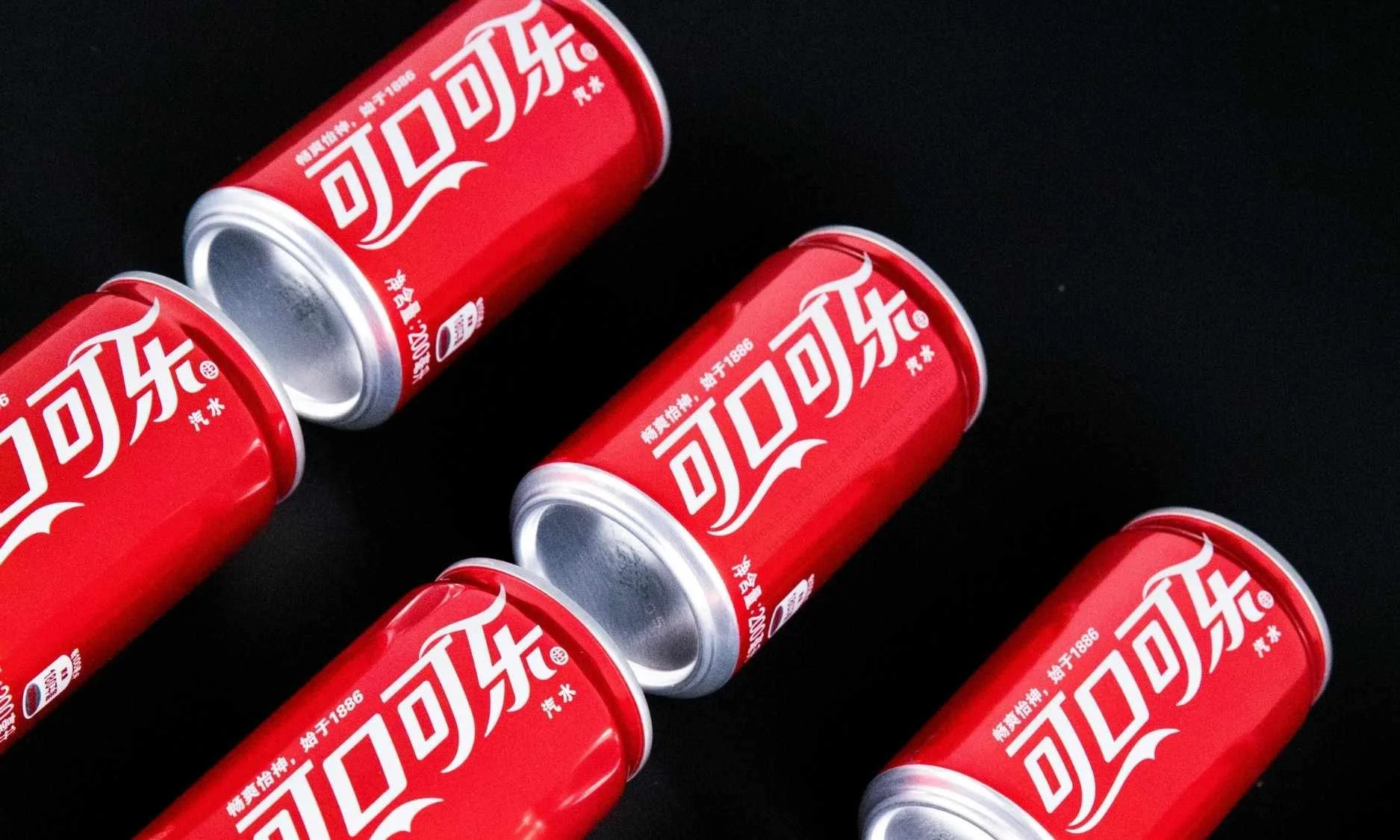
Coca-Cola’s brand identity is recognizable even in other countries; the signature elements stay always loyal consistent to the original brand guidelines.
What most businesses get wrong about branding
Ainoa was founded after years of observing the same pattern across founders and small business owners:
“The most common mistake is treating branding as a project with a finish line. You commission a logo and a color palette, publish a new website, and consider the brand done. Then you wonder why growth feels harder than it should — why you're winning clients on price rather than on reputation, why referrals aren't happening, why you need to explain yourself in every sales conversation. The brand was never finished. It was started. Branding is the ongoing work of making sure everything your business does — the way you write an email, the language on your pricing page, the way you handle a complaint — is consistent with the story you want people to carry about you. That consistency, built over time, is what becomes equity. There is no shortcut to it.”
A second pattern Salla points to is the conflation of brand with aesthetics, particularly among businesses that invest in design before strategy:
“Beautiful design on a brand that hasn't done the strategic work is expensive decoration. I see it constantly with early-stage businesses that have spent serious money on a logo and visual identity before they've been able to answer the question: who is this for, and why should they choose us over anyone else? The design problem is usually easy. The strategy problem, like positioning, audience, differentiation — that is the hard part, and no amount of nice typography solves it."
What is branding strategy?
A branding strategy is the set of decisions that determine how your brand will build and maintain its position in the market over time. It is not a campaign plan or a visual style guide; it is the main document that those things should be derived from.
A branding strategy typically addresses:
Positioning: where the brand sits in the market relative to competitors, and what it claims as its distinct territory.
Target audience: who the brand is for, described with enough specificity to make real, creative and channel decisions, not just demographic categories.
Brand promise: what the brand consistently delivers that competitors do not, and what customers can rely on as the baseline of any experience with the brand.
Differentiation: what makes the brand distinctive, whether in how it works, what it stands for, who it serves, or how it communicates.
Brand architecture: how the brand relates to any sub-brands, product lines, or services the business offers.
The strategy precedes and informs everything else: the visual identity, the tone of voice, the content, the marketing mix. Businesses that reverse this sequence, and start with a logo or a website and expect strategy to mysteriously emerge from that, typically find themselves rebranding completely from scratch within three years as the business grows past what the early brand could support.
How to develop a brand: where to start
For businesses at any stage, brand development follows a consistent sequence, even if the depth of each stage varies.
Audit first: Before building, understand what exists. What do current customers say about the business? What associations do people already have? What is working and what is creating confusion? The answers to these questions are the raw material for strategy.
Clarify positioning: This should be done way before designing anything. Where does this business sit relative to alternatives? What does it own distinctively? Who specifically is it for? A positioning statement is the foundation; everything else is built on it.
Build identity as a system: Develop brand identity as a system. Visual and verbal identity should be developed together, not separately. The logo, the color palette, the typography, the voice, and the tone are all expressing the same thing, and they should be designed to work together.
Define how to apply it: A brand guide and its rules are only useful if it covers the decisions people actually face: how to write a LinkedIn post, how to caption a product photo, how to write a proposal introduction. Principles over rules — the goal is consistent decision-making, not rigid templates.
Measure and refine: Brand health can be tracked; awareness, association, preference, and loyalty can all be measured, even for small businesses. Qualitative feedback from customers — specifically what words they use to describe the business to others — is the most direct measure of whether the brand is doing its job.

Visual branding for Chutney Castle.
Frequently asked questions about branding
What exactly is branding?
Branding is the strategic process of shaping how your business is perceived. It includes your visual identity (logo, colors, typography), your verbal identity (name, voice, tone, messaging), your positioning in the market, and the values and promise that define what your business stands for. It is not just a logo alone; it is the complete system that makes your business recognisable, trustworthy, and memorable.
What is the difference between branding and marketing?
Branding defines who you are and what you stand for. Marketing communicates that to your target audience through campaigns, content, and channels. Branding is strategy; marketing is execution. The two are interdependent — marketing without clear branding produces inconsistent messages, and branding without marketing has no vehicle for reaching people.
What is brand identity?
Brand identity is the system of visual and verbal elements that express your brand: your logo, color palette, typography, photography style, name, tone of voice, and messaging. These elements work together to create a consistent, recognisable impression across every touchpoint.
What is brand equity, and why does it matter?
Brand equity is the commercial value generated by having a recognised and trusted brand. It shows up as higher pricing power, lower customer acquisition costs, faster new product adoption, and greater resilience during market downturns. It is built over time through consistent delivery on a brand promise.
How does branding differ from advertising?
Advertising is paid distribution of a message. Branding is the message itself — the identity, values, and positioning that advertising communicates. You can advertise without a clear brand, but the messages will be inconsistent, and the investment will not compound. With a clear brand, every piece of advertising reinforces the same impression, and the cumulative effect is much larger than the sum of individual campaigns.
Can small businesses benefit from branding?
Small businesses benefit from branding more directly than large ones. A large company can build familiarity through advertising spend and distribution scale. A small business must build trust through the quality and consistency of every interaction, and branding is what makes that consistency visible and memorable to the people it is trying to reach. Clear brand positioning also helps small businesses compete on terms other than price, which is where most small businesses lose on pure commodity comparison.
What is brand voice?
Brand voice is the personality and character expressed through the way a brand writes and communicates. It is consistent across contexts — a brand that is warm and direct in emails should be warm and direct on its website and in its social content. Tone can shift (more formal in a proposal, more casual in a newsletter), but the underlying voice remains recognisable.
What is brand personality?
Brand personality is the set of human characteristics associated with a brand. Jennifer Aaker's widely cited research identified five dimensions of brand personality: sincerity (warmth, honesty), excitement (energy, daring), competence (reliability, intelligence), sophistication (prestige, elegance), and ruggedness (outdoorsy, tough). Most strong brands own one or two dimensions distinctively, which is what makes them feel coherent rather than generic.
Work with Ainoa on brand strategy
Ainoa Agency is a psychology-led branding studio. We work with founders and marketing teams to develop brand strategy that is built around how customers actually make decisions — not assumptions about what looks good or what competitors are doing.
If you're looking to build or refine your brand, see our branding services to understand what that process looks like. Or start with our approach to brand strategy to see how we work.
Get more updates from Ainoa in your Google News feed.
Articles on our blog may contain content drafted with the assistance of AI tools, always reviewed and polished by Ainoa's team.