Quick Summary
Buyer psychology is the applied study of how people move from first awareness to purchase, and the mental processes that determine the outcome at each stage.
Six principles account for most of the psychology operating in purchase decisions: reciprocity, commitment and consistency, the endowment effect, goal gradient, mental accounting, and loss aversion.
The buyer journey is a psychological sequence, not a linear funnel. Each stage activates different cognitive processes and is susceptible to different influences.
The most common mistake founders make is optimising for the wrong buyer — building a strategy around assumptions and personal preferences rather than genuine buyer insight.
Buyer psychology applied ethically creates decisions that buyers are glad they made. Applied manipulatively, it creates short-term conversion and long-term brand damage.
A company selling insurance door-to-door had a problem. Their salespeople were technically excellent — knew the products cold, handled objections fluently, and could quote numbers from memory. Still though, their sales were mediocre.
To tackle this problem, the company hired a consultant. His suggestion was to give every salesperson a cheap pen to leave with each prospect at the start of the visit as a gift. A little something for “nothing”.
Conversions doubled.
This is the reciprocity principle, one of the most consistently documented drivers of buyer behaviour across cultures and contexts. And while buyers might notice this tactic, it works because the social obligation reciprocity creates, works at a level that noticing does not reach.
That gap between noticing and behaving is what buyer psychology is fundamentally about.
Buyer psychology definition
Buyer psychology is the applied study of the mental, emotional, and social processes that move a person from first awareness of a product to the decision to purchase it — and through the experience that follows. It sits within the broader field of consumer psychology, but focuses specifically on the decision journey: what triggers it, what shapes it at each stage, and what determines the outcome.
The practical difference from consumer psychology broadly: buyer psychology is more applied and more commercial. Where consumer psychology asks “how do humans evaluate and choose?”, buyer psychology asks “how does this specific person, in this specific context, decide to buy this specific thing?”
The two overlap substantially, and you'll find the same foundational research running through both. The distinction is in orientation: buyer psychology always comes back to the decision moment and what surrounds it.
The buyer journey is a psychological process, not a funnel
Marketing textbooks often describe a buyer journey as a linear funnel: awareness, consideration, decision, purchase, loyalty. Real buyer behaviour is less linear and in reality, the buyer might go back and for these stages multiple times throughout their buyer journey. But the psychological sequence — the order in which the mind engages, evaluates, and commits — is actually quite consistent. Understanding it gives you a framework for diagnosing where buyers are dropping off, and why.
Stage 1: Problem recognition (often manufactured)
A buyer's journey begins with a recognised need or desire. Sometimes this need is organic, for example, a phone breaks, a subscription ends, or a pain becomes acute. More often, this urgency is manufactured or amplified by brand exposure, social comparison, or a well-timed message that makes an unacknowledged discomfort suddenly feel urgent.
The availability heuristic (Tversky & Kahneman, 1973) is central here: the more easily a problem comes to mind, the more pressing it feels. Advertising, content, and social proof all make certain problems (and also certain categories of solution) more mentally available.
Stage 2: Information search (heavily shaped by System 1 thinking)
When a need is recognised, people search for information. However, the information search is not the neutral process it appears to be. People seek confirmation of what they already suspect (confirmation bias, Wason 1960), weigh vivid and recent sources disproportionately (availability heuristic), and often stop searching the moment they feel they have enough, which is usually after very little.
This is why brand familiarity matters so much. The mere exposure effect, made popular by Zajonc in 1968, showed that prior exposure to a stimulus increases liking for it, with no conscious processing required. The brand a buyer has seen before has a structural advantage at the information search stage.
Stage 3: Evaluation of alternatives (anchoring, decoy, compromise)
Here is where cognitive biases exert their most visible influence. How options are presented — the order, framing, and relative positioning of alternatives — shapes which one looks most attractive, entirely independent of objective merit.
The decoy effect (Huber, Payne & Puto, 1982) shows that adding an asymmetrically inferior third option to a choice set increases the attractiveness of the option it most closely resembles. The Economist famously used this with their three-tier subscription: print-only ($125), web-only ($59), or both ($125). The print-only option existed solely to make the combined option look like a deal, and yes, it did work.
Stage 4: The purchase decision (loss aversion and the final push)
The moment of actual commitment activates a different psychology than the evaluation stage. Loss aversion becomes acute: the question shifts from “do I want this?” to “what do I lose if I don't get this, and what do I lose by spending this money?” The pain of paying — documented by Prelec and Loewenstein in 1998 — produces genuine psychological discomfort at the point of transaction.
This is why anything that reduces friction at checkout (such as one-click purchasing, saved payment details, digital wallets) has a measurable positive impact on conversion. The mechanisms that decouple the psychological experience of paying from the psychological experience of having are commercially powerful.
Stage 5: Post-purchase (rationalization and loyalty)
After buying, cognitive dissonance is activated. The buyer is now invested in having made a good decision. They unconsciously seek information that confirms their choice was correct, and downweight information that suggests it wasn't.
Brands that understand this use post-purchase communication strategically, including onboarding sequences, confirmation emails that reinforce the decision, and community access that builds identity around ownership. These are exactly where loyalty is formed or destroyed.

Customers who shop through loyalty programmes often make purchases significantly more frequently as they approach their free reward than at the start of the programme.
Six buyer psychology principles that shape nearly every purchase
1. Reciprocity: the social debt that pre-closes the sale
When someone gives us something (even something we didn't ask for), we feel a compulsion to give something back. This is not learned social grace, but a deeply wired response present across every human culture.
The commercial applications can be seen everywhere around the globe; Free content that delivers genuine value creates an obligation toward the brand, and free samples convert at rates that defy the logic of a zero-cost product. Even the “free gift” insurance salespeople leave behind their visit doubles compliance. What marketers call “content marketing” is, at its psychological core, a systematic reciprocity strategy.
2. Commitment and consistency: the identity lock-in
Freedman and Fraser ran an experiment in which researchers asked homeowners in California if they would display a large, ugly “Drive Carefully” sign in their front garden. When asked cold, only 17% agreed. Among homeowners who had two weeks earlier agreed to a much smaller request, a small window sticker instead of the large ugly sign, compliance jumped to 76%.
The mechanism: once people make a commitment, even a trivial one, they feel internal pressure to remain consistent with it. The small commitment reshapes how they see themselves, and suddenly, the homeowners in this case become “the kind of person who supports road safety.” The large request simply activates that identity.
In buyer psychology, an email sign-up, a free trial, a product added to a wishlist, and a brand quiz completed are all micro-commitments that move the buyer progressively closer to a purchase identity. The product they eventually buy confirms who they have already decided to become.
3. The endowment effect: ownership before ownership
Kahneman, Knetsch, and Thaler gave participants a coffee mug in an experiment from 1990. They then asked what price they would sell it for, and asked non-owners what price they would pay. Owners demanded significantly more than buyers would pay for a mug they had held for minutes.
The endowment effect works whenever a buyer feels premature ownership: free trials create a sense of having already adopted the product; “build your own” configurators make a customized version feel personally theirs before purchase and personal shoppers who set items aside for a customer create a feeling of reserved ownership that makes not buying feel like a loss.
If you find the earliest point in the buyer journey at which you can create a legitimate sense of ownership, even partial or temporary, you have found a powerful anchor that significantly reduces the risk of the client walking away.
4. The goal gradient effect: motivation accelerates as the finish line approaches
In 1932, American psychologist Clark L. Hull observed in animal learning experiments that effort and speed increased as the reward goal got closer. Fast forward to over seventy years later, in 2006, Kivetz, Urminsky, and Zheng replicated this in consumer behaviour: customers at a coffee shop loyalty programme bought coffee significantly more frequently as they approached their free drink reward than at the start of the programme.
The commercial applications are direct, for example, progress bars (“you're 70% of the way to Gold status”) accelerate buyer engagement, and similarly, profile completion prompts (“your account is 80% complete”) increase action. Loyalty programmes that show remaining stamps, points, or tiers use goal gradient deliberately to increase purchase frequency.
Duolingo's streak counter is one of the most effective applications of the goal-gradient effect in consumer technology. Users who are close to losing a streak (or close to a milestone like opening a reward chest) show significantly higher daily engagement. The streak is a goal that the user protects through consistent effort and habit building.
5. Mental accounting: money is not fungible in the human mind
American economist Richard Thaler demonstrated in his paper published in Marketing Science in 1985, that people treat money differently depending on its psychological category, not its actual value. A bonus feels easier to spend than salary. Good examples of these principles are, for example, how gift card money feels less real than cash or how a “holiday fund” gets protected even when the credit card bill is overdue.
Brands exploit this constantly. Loyalty points are not seen as cash because their psychological category is different, and spending them triggers far less pain than spending money. Subscription fees, paid monthly, enter a different mental account from one-time purchases. “Invest in yourself” reframes a personal training package from a discretionary expense into a capital allocation.
Understanding which mental account your product lives in, and whether you can move it to a more hospitable one, is one of the most underused levers in brand strategy.
6. Loss aversion at the purchase moment
Kahneman and Tversky's foundational finding in 1979 bears direct application at the final stage of the buyer journey. Once a buyer has a product in their cart, attention on a waitlist, or a trial in progress, the prospect of losing access to it weighs more heavily than the prospect of gaining it.
Booking.com's interface is a masterclass in this application: “Only 2 rooms left at this price,” “8 people are looking at this hotel right now,” “Booked 12 times today.” Each message is loss aversion messaging — the risk of losing access, social proof that others will take what you hesitate over. Whether these messages are always authentic is a separate question, but clearly they work.

Humans tend to overvalue items they own compared to identical items they do not own, leading to reluctance to sell them.
What most founders don't know about their buyers
One of the most consistent observations I’ve made about early-stage founders is how rarely they test assumptions about their buyers before committing to product, pricing, and messaging.
The most important thing for any early-stage founder is truly understanding who they're selling to — and making decisions based on that, not based on personal assumptions or what they personally prefer. One of the biggest mistakes I see is founders asking friends and family for feedback on their product or brand. Unless those friends and family are genuinely your target audience, you might be optimizing for the completely wrong person.
This matters for buyer psychology specifically because the principles above only work when applied to the right buyer. Loss aversion messaging lands very differently on a budget-conscious first-time buyer than on a loyal high-value customer. The endowment effect is meaningless if you create premature ownership for someone who never intended to buy.
My honest advice for founders before building any brand or business strategy is rather simple: spend more time with actual buyers. Not anonymous surveys or statistics; have real conversations. Find the people most likely to buy what you're offering, and ask them. Not what they want, because that produces aspirational answers. Ask them about what they actually do, what brands they currently use and why, where they feel friction. That's the psychology you design for.
Most consumer decisions are not rational; people like to often pretend that they are, but they're not — they're unconscious, shaped by patterns built up over a lifetime. Their brain has already chosen, and the comparison, the evaluation, and the deliberation come after, attempting to justify the unconscious purchase decision rationally. It's the rational mind writing a story that justifies a conclusion it didn't reach.
Applying buyer psychology without being manipulative
There is a distinction worth noting: buyer psychology can be used to help buyers make decisions they will be glad they made, or to pressure buyers into decisions they will regret. The former builds brands, the latter destroys them on the long-term.
Genuine scarcity messaging is honest and effective. Manufactured scarcity — “only 3 left” when there are hundreds in the warehouse — produces short-term conversion at the cost of long-term trust. Real reciprocity delivers value before asking for a sale. Content designed purely to create obligation, with no genuine value transfer, is eventually recognised and resented.
Here’s a practical test you can use: “Would I feel comfortable if the customer knew exactly what we were doing here, and why?” If the answer is yes, the principle is being applied ethically. If it requires covering up to work, it probably shouldn't be used.
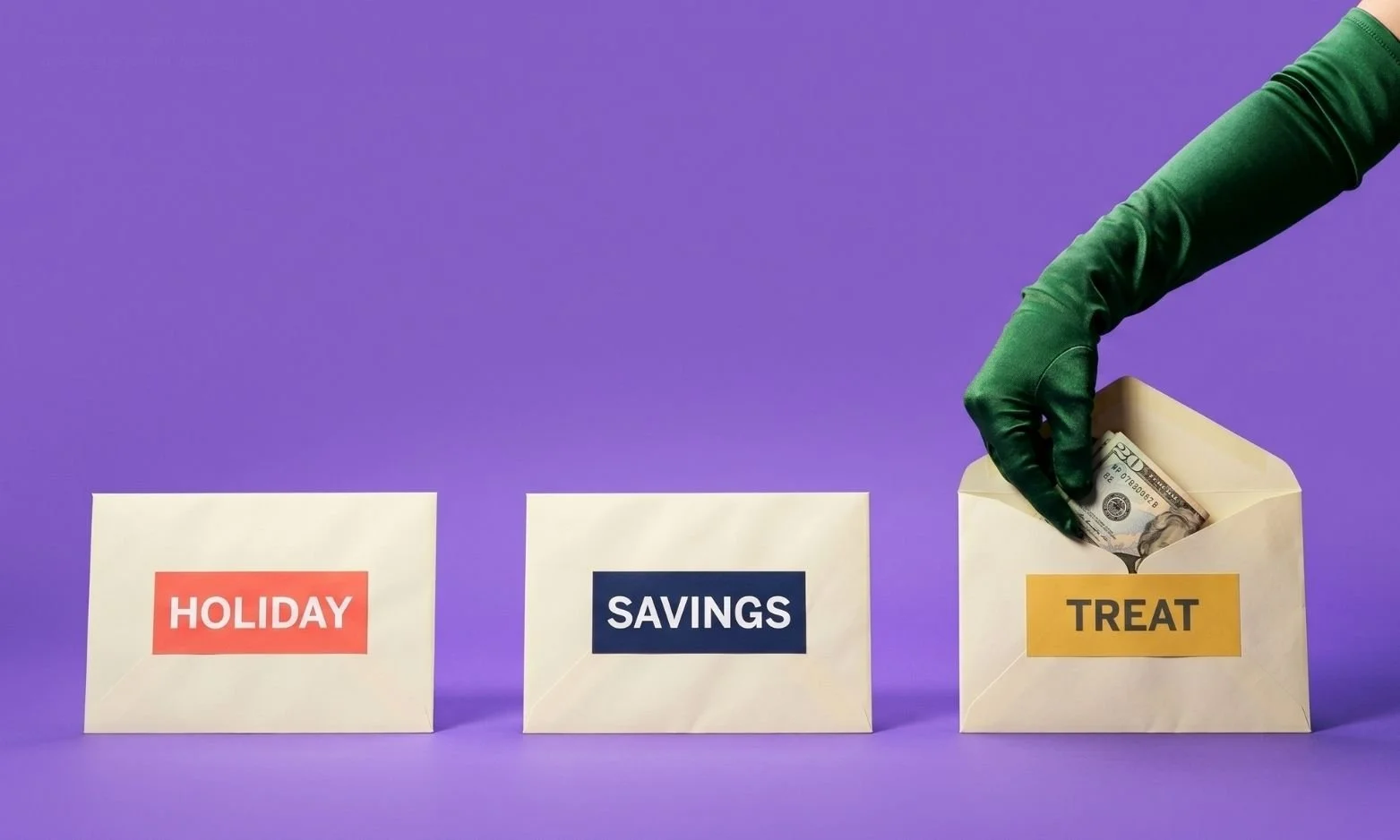
Nobel Prize winner Thaler demonstrated that people tend to place money into different “mental buckets” (like a “holiday fund” or a “vacation fund”) and treat them differently, which is not rational but is human.
Three buyer psychology mistakes to stop making
Assuming your buyer is rational: The most expensive mistake in brand strategy is treating the purchase decision as a rational evaluation of features and price. By the time the rational system is engaged, the emotional decision has usually already been made.
Getting buyers but losing them post-purchase: The post-purchase stage is where most brands stop spending attention. This is precisely where loyalty is formed. A buyer in the grip of post-purchase cognitive dissonance needs confirmation that they made the right choice. Brands that provide it — through genuine onboarding, community, and follow-up — convert one-time buyers into advocates.
Optimising for conversion at the expense of fit: Reciprocity, urgency, and commitment can drive purchases from buyers who are not a good fit for the product. These buyers return it, resent the brand, and leave damaging reviews. Buyer psychology applied ethically means qualifying buyers, not just converting them.
Understanding your buyer is the foundation of everything else in brand strategy. If you want to explore how buyer psychology applies to your specific brand, product, or market, Ainoa works with founders and marketing teams to build psychology-led brand strategy. Read more about our approach or get in touch.