Gen Z Consumer Behaviour: What Brands Keep Getting Wrong
When I wrote about cause marketing and Gen Z in 2023, I focused on the values-driven side of my generation, that being the genuine commitment to social and environmental causes, the ability to spot greenwashing or performative content, the preference for brands that actually stand for something.
All of that is still true, but the more I have observed my peers as consumers, the more I have noticed something I did not fully account for in that first article: the attraction to a trend can be just as strong as the alignment with a value. And for brands trying to reach Gen Z, ignoring that contradiction leads to a very particular kind of misunderstanding.
This article is for those who share my interests in understanding the inner workings of how human beings think and act, and why these mechanisms are important for consumer research and strategy development, so get ready for a deep dive into some social and psychological discussion.
I’ll introduce this topic by highlighting that Gen Z is by no means homogenous. We are the generation that both calls out fast fashion and queues for hours for the latest drop of a product. We care deeply about authenticity and yet we are viscerally attracted to exclusivity. We can detect a hollow brand message in seconds and we also consume the content of influencers who are paid to endorse things they may or may not actually use. Considering this dual plane of factors wholly, without flattening the contradictions, is what understanding Gen Z as a consumer group actually requires.
The Blind Consumption We Don't Talk About
There is a narrative around Gen Z and consumption that goes something like this: they are the conscious generation, the ones who push back against hyperconsumerism and mass consumption, who buy secondhand, all of that and more. This narrative is accurate, but only to a degree.
It is incomplete because within the same demographic that boycotts brands over labour practices, there is an enormous amount of what I can only call blind trend-following. Instinctively purchasing, not out of genuine desire for a product but out of a need to participate in a cultural moment or to attract social validation.
Stanley cups. Skims. Whatever the currently biggest celebrity posts on Instagram. The specific subjects of online attention change constantly, but the mechanism is consistent: a subject gains traction and becomes culturally significant, meaning it circulates in spaces where Gen Z definitely spends time, and the motivation to own it comes from social pressure manifesting as personal desire. It is conformity dressed in the language of individuality.
People participate in the subject to feel part of something, and in an ever-online culture saturated with influential imagery of the lifestyle they aspire to, the subject functions as sociocultural proof of access to that lifestyle
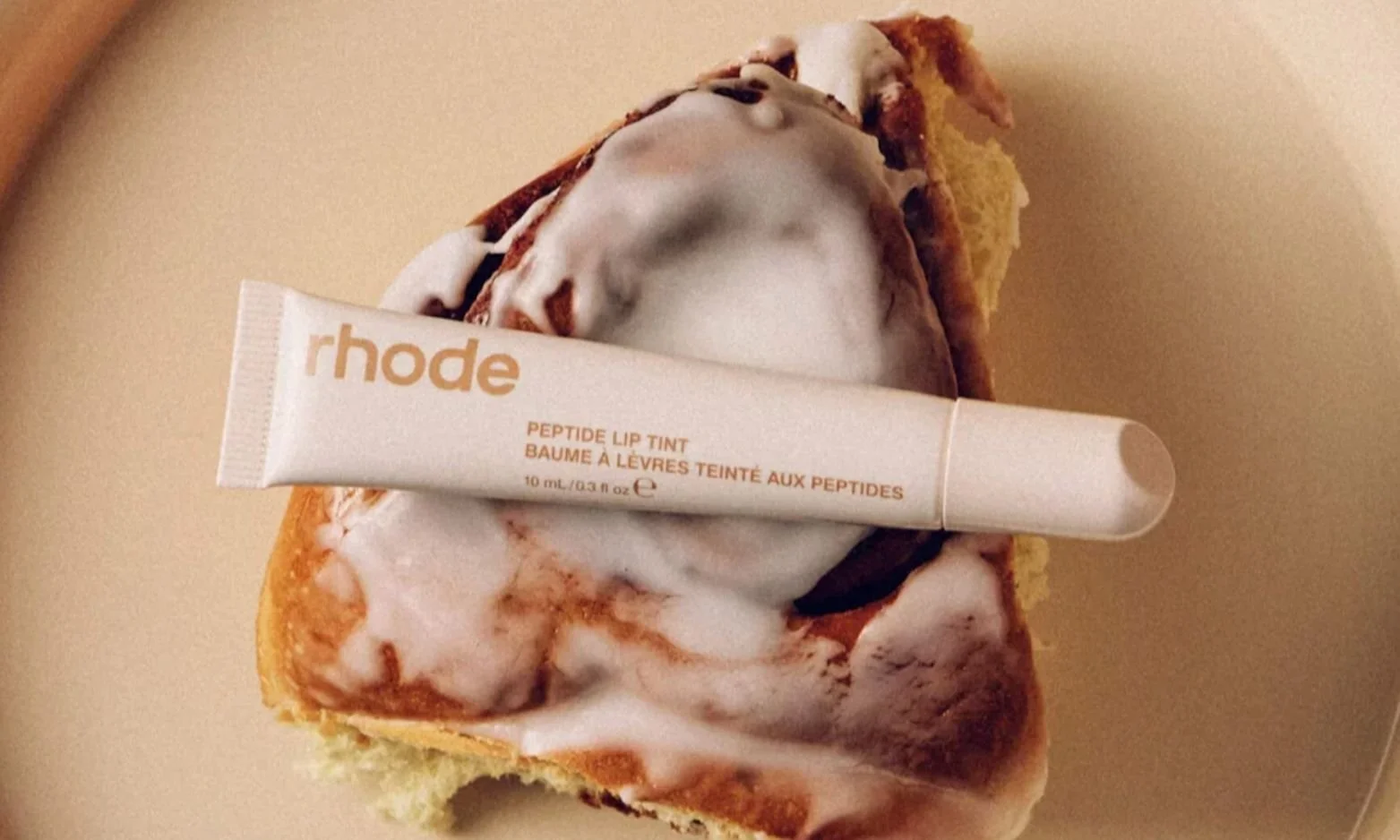
Rhode’s lip tint and lip case are great examples of culturally significant Gen Z trends. | Image: Rhode
What Drives the Exclusivity Economy?
The decision between giving into the attraction of a trend versus remaining loyal to one’s values can in fact be swayed. There is a particular invisible force within the trend cycle that is worth identifying: the role of exclusivity in driving Gen Z purchases, most essentially in the context of the current economic climate.
We are living through a period that feels economically precarious for a lot of young people, with housing costs, inflation, and uncertain job markets being only to name a few. The spaces between the income classes have grown, and for a generation that came of age during the widening of those spaces alongside the boom of the digital age, there is a complex relationship with the markers and feelings of financial ease.
What I notice among people I see around me is a desire to signal that they can still access the things that signal abundance in a time of economic sensitivity, however, despite this privilege they are nowhere near the heights of the upper socioeconomic groups whose consumption is truly responsible for today’s state of the world.
Now, that description can perhaps come across as quite convoluted. I’ll provide an example based on interactions I have had at my university: Students are complaining about cost of living, groceries, typical financial stressors for students. The same students take any chance to post about their activities and vacations, curated pictures and captions socially signifying they have the access to certain luxuries in today’s financial climate. Then coming back and to once again talk about the ever-relatable tight-budgeted student lifestyle.
They persist in supporting things such as thrifting, recycling, human and animal rights, as if they aren’t always wearing the newest trending clothing items, owning the top lifestyle products, posting every restaurant meal on their stories, or being able to afford vacations at all.
They continue to shun the consumption of the top 1% as if they don’t long for the same comfortable lifestyle through consuming all of what the highest in society display. I am by no means looking down on this behaviour, because I myself live all of this first-hand, all in order to escape the crushing weight of the socioeconomic and environmental issues in this anthropocene.
In such foreboding times, we would do anything to glimpse through the eyes of those who need not worry about how much a brief choice of leisurely relief will set them back financially. In short, conforming to trends contributes to maintaining a positive self-perception through simultaneous external social validation.
Exclusivity is central to this. Limited editions, sold-out items, things that only some people can get, they carry a social value that goes beyond the object itself. Owning the thing means you got there. It means you are not falling below being able to afford the intended price bracket for what is currently sought after.
This is not new either, as the psychology of scarcity and social signalling has been explored extensively in consumer research before, but the intensity of its presence in the current moment feels heightened. Brands that understand such dynamics instinctively have a particular kind of power with understanding not just Gen Z but any target audience when such psychological intricacies are heeded. As Gen Z would put it, if you know, you know, and only after that do strategy decisions start to come as a result of being informed by human understanding rather than just educated guesses and business theories.
It is true that for brands, this creates a genuine tension with the values-authenticity narrative. A brand cannot simultaneously attract through radical accessibility and signal the desired exclusivity, but a way to pertain to this dichotomous Gen Z audience is simply through being honest about which game you are playing. This honesty, paradoxically, builds more trust than getting caught up in attempting to occupy both positions at once.

Gen Z can simultaneously care deeply about sustainability and chase the latest TikTok trends.
The “Marketing Voice” Problem
Gen Z has grown up surrounded by advertising at a density and sophistication that previous generations did not experience. By the time someone born in 2000 was a teenager, every feed they scrolled was algorithmically shaped, every influencer they followed had sponsorship arrangements, and the tools for native advertising, that is, content that looks organic but is not, were already deeply rooted. This has produced a particular skill: the ability to detect what I would call the marketing voice.
The marketing voice is not any one thing. It is a pattern of signals that, together, communicate “this brand is performing concern about you rather than actually having it” or “this brand is pretending they understand your problem so that they can sell you a solution”.
It might be the unnaturally sprinkled Gen Z slang in a brand's social captions. It might be the sudden appearance of a social cause in a brand's messaging that was never mentioned before a boycott made it commercially relevant. It might be the way a brand responds to a trend with manufactured spontaneity, the "we saw this coming" energy of something that clearly did not come organically.
What I see a lot is brands that are so worried about backlash from Gen Z, about saying the wrong thing, getting called out, missing the cultural moment, that they end up doing something worse: they sidestep. They produce content that is carefully calibrated to avoid offence rather than genuinely communicate. They are withheld in their expression so that they can appeal to the masses, but end up becoming too bland and forgettable to reap any benefits of such precaution. They say things they think people want to hear. And Gen Z, who has been watching marketing perform itself since childhood, notices.
My articles about brand archetypes and the Bratz x Gymshark collaboration explain the notions of performativity in a brand, and the marketing voice certainly plays a role in it too, if not the lead one. This is why honesty paradoxically fulfills both sides of this Gen Z consumer profile, as transparency can both reaffirm to the consumer that your brand is a responsible choice, as well as provide the comfort and benefits they are looking for in such trying times.
Growing Up When Everything Is an Ad
One thing that distinguishes Gen Z from every previous consumer generation is that we did not experience the internet as a space distinct from commerce, by the time we were paying attention, the feed was already the product and the product was already in the feed.
I remember the moment when adverts started appearing everywhere on platforms that previously felt more organic, when Pinterest results started including more sponsored pins than actual pins, when YouTube ads went from fifteen seconds to over two unskippable minutes, when Instagram went from sharing photos of genuine everyday shenanigans all the way to a curated “day in my life”, vlogged shopping experience.
I found the disguised ads the most concerning: something designed to look like organic content but which is actually paid placement feels dishonest in a specific way. It is not that I mind being shown an advert, it is that I mind being shown an advert pretending to be something else.
This is why native advertising sits awkwardly with Gen Z even when it works in the short term. We know what an algorithmically sponsored pin is even when it does not say so, yet, we might still be attracted to a potential cheaper alternative to an expensive popular item we have searched for before, so we cave, click, and purchase nevertheless.
The knowledge that a brand chose deception over transparency does not disappear even when the click happens, but exclusivity swayed that decision.

Influencer Marketing: The Trust Hierarchy
Influencer marketing is not a monolith for Gen Z audiences, it exists on a trust spectrum, and where a particular influencer sits on that spectrum determines how their endorsements land.
At one end are influencers who have clearly been loyal to a brand or product even before the sponsorship. When someone who has been visibly using a product for two years announces a partnership with the brand, there is a reasonable inference that the endorsement reflects genuine preference. The partnership makes sense given what we already know about them, that they were using the product before they grew enough of a following for the brand to realise sponsoring them is mutually beneficial.
At the other end are influencers who are clearly in it for the deal, whose endorsements arrive without context, whose lifestyle content shifts dramatically with whoever is paying, and whose authenticity signals are lacking simply even due to bad acting.
Gen Z audiences navigate this spectrum with considerable sophistication, because they have had years of practice. For brands, the implication is that influencer selection is a brand signal, not just a reach decision. Who you choose to associate with communicates something about what you value and what audience you are actually trying to reach.
As discussed in my article on cause marketing and Gen Z, the audience that Gen Z trusts most in the influencer space is the one that demonstrates consistency between private values and public presentation, which is, again, the authenticity question coming back around.
What Actually Works
Given all of this, now that I have shed light on the invisible forces of pressures, values, trends and desires that hang in the balance, how exclusivity can sway this dynamic, and finally, the influencer and marketing voice detection, what does genuine brand connection with Gen Z actually look like?
It starts with not trying to be everything. Brands that attempt to appeal to Gen Z by performing every value Gen Z holds end up appealing to no one specifically. The brands that build real connection tend to pick something and be consistently, specifically, sometimes inconveniently committed to it. Patagonia committed to environmental responsibility in a way that cost it sales (the “Don't Buy This Jacket” campaign is the obvious example). That commitment read as real because it was costly, and Gen Z noticed.
It continues with transparency over polish. Not every communication has to be perfect. Brands that acknowledge limitations, respond to criticism directly, and resist the temptation to manage every narrative through PR often build more durable trust than brands whose communications are flawless but feel managed and calculated. For example, Oatly's willingness to be imperfect, self-deprecating, openly weird, occasionally uncomfortable, is part of why its personality reads as genuine.
Lastly, it requires the most essential understanding that the conscious consumer and the trend-follower are often the same person. A Gen Z consumer can queue online to buy the limited-edition collab before it immediately sells out, as well as be picky about selecting ethically produced basics. Brands do not have to choose between being values-driven and being culturally relevant, but they do have to be honest about which game they are playing at which moment, and not pretend the two are always the same thing.
In my personal experience, I would say that a lot of this dualistic profile can also be applied to Millennial audiences, and better yet, this kind of profile analysis can still be applied to all sorts of target audiences, as long as you know what indicators to look for in accordance with your branding goals.
If you would like to understand and analyse your audiences as exemplified here through research, profiling, and brand strategy that accounts for these sociopsychological factors, you can explore our branding services or learn more about our approach.

Our work for Apex Pro targeted Gen Z and younger Millennials.
FAQ: Gen Z Consumer Behaviour
What makes Gen Z different as consumers?
Gen Z has grown up in a fully commercial media environment, there was near to no period before influencer marketing, native advertising, or algorithmic feeds by the time Gen Z entered adulthood or even adolescence. This produces a particular ability to detect performative brand communication. At the same time, Gen Z is both more values-driven and more trend-responsive than marketing narratives typically acknowledge, and that contradiction is central to understanding how this generation actually behaves and how to best pertain to both sides of such a dichotomous profile.
Does Gen Z care about brand values?
Yes, but not in an absolute way. Gen Z cares about whether brand values are consistently demonstrated and recognised in brand behaviour, not just stated in brand guidelines or campaign copy. A brand that invokes social causes only when commercially convenient, or whose supply chain practices contradict its communication values, will be called out by Gen Z audiences who have developed sharp instincts for the gap between stated and enacted values.
How do you market to Gen Z authentically?
Authenticity for Gen Z is not a style choice, it is a consistency requirement. A brand that picks a genuine position and holds it even when it is inconvenient, even in moments where something trendier might perform better, is more likely to build a durable connection than a brand that chases the rush of each cultural moment. The marketing voice is most clearly detected when a brand behaves out of character for its actual values.
Does influencer marketing work with Gen Z?
It depends on the influencer and the relationship. Endorsements from influencers who have demonstrated genuine affinity with a product or category carry weight and recognition. Endorsements that feel transactional or that are inconsistent with an influencer's previously expressed preferences, or that arrive without context are received with scepticism. Gen Z audiences have had years of practice distinguishing between the two alongside the rise of social media marketing.
What is the marketing voice, and why does Gen Z detect it?
The marketing voice is the pattern of signals, over-calibrated language and sudden cause adoption that communicates "this brand is performing concern or relatability rather than having it." Gen Z detects it partly because of exposure: having grown up in a fully commercialised media environment, this generation has had more practice identifying the signals of manufactured authenticity than any previous generation of consumers.
Is Gen Z brand loyal?
Gen Z can be deeply loyal to brands that earn it through consistent, genuine demonstration of values. That loyalty is harder to achieve and easier to lose than traditional brand loyalty, because Gen Z audiences are more willing to publicly withdraw support when a brand behaves in ways that contradict its stated identity. Loyalty for this generation is conditional on ongoing congruence, not just initial attraction.
Get more updates from Ainoa in your Google News feed.
Articles on our blog may contain content drafted with the assistance of AI tools, always reviewed and polished by Ainoa's team.