The Psychology of Impulse Buying: What Triggers Unplanned Purchases and What It Means for Your Brand
It’s Thursday evening after your shift. Usually you do your grocery shopping on Sundays, but you need to pick up few items for tonight’s dinner. So you decide to do a really quick supermarket run to get some pasta and milk. After 25 mins, you leave with pasta, milk, a magazine you didn't know existed, a packet of crisps from the checkout display rack, and a discounted kitchen gadget you noticed near the entrance. The planned purchases took four minutes. The unplanned ones took twenty.
This very familiar and relatable scenario captures impulse buying in its everyday form. You might think this is irrational behaviour, but it actually isn’t. It is the predictable outcome of predictable psychological processes, operating in environments that have often been deliberately designed to trigger them.
Understanding those triggers and processes behind them matters for anyone building a brand. The conditions that influence buyers to make impulse purchases in the first place also exist outside of retail environments. They are present in e-commerce experiences, subscription flows, digital browsing, and anywhere a brand creates a moment of encounter with a potential buyer who has not yet committed to a decision.
What is impulse buying?
Impulse buying (definition)
A purchase that is unplanned at the point of entry into a shopping environment, made in response to a sudden urge or stimulus encountered during the shopping experience. Research distinguishes between pure impulse (entirely spontaneous), reminder impulse (triggered by seeing something needed), and suggestion impulse (triggered by exposure to something unknown but desired on sight).
Consumer researcher Dennis Rook'spaper from 1987 on the buying impulse defined it as “a sudden, often powerful and persistent urge to buy something immediately.” Rook identified its key characteristics: spontaneity, power and compulsion, excitement and stimulation, disregard for consequences, and conflict between impulse and self-control.
Unplanned purchasing is a consistent, significant part of retail behaviour across categories and contexts, though its rate varies. Bellenger, Robertson, and Hirschman's 1978 analysis found impulse rates differing substantially by product type, with some categories far more susceptible than others. What is also shifting is where the impulse moment now occurs. A 2025 shopper study found that over 75% of purchases in traditional impulse categories (eg. chocolates, salty snacks, fizzy drinks) are now planned before the shopper enters a store.
The impulse shopping decision still feels spontaneous, but it was shaped earlier: by social media, targeted ads, and algorithmic recommendations. The impulse moment has migrated from the checkout display to the phone screen. Understanding why it fires at all, whether in a supermarket aisle or a social media feed, requires looking at what's happening in the brain.
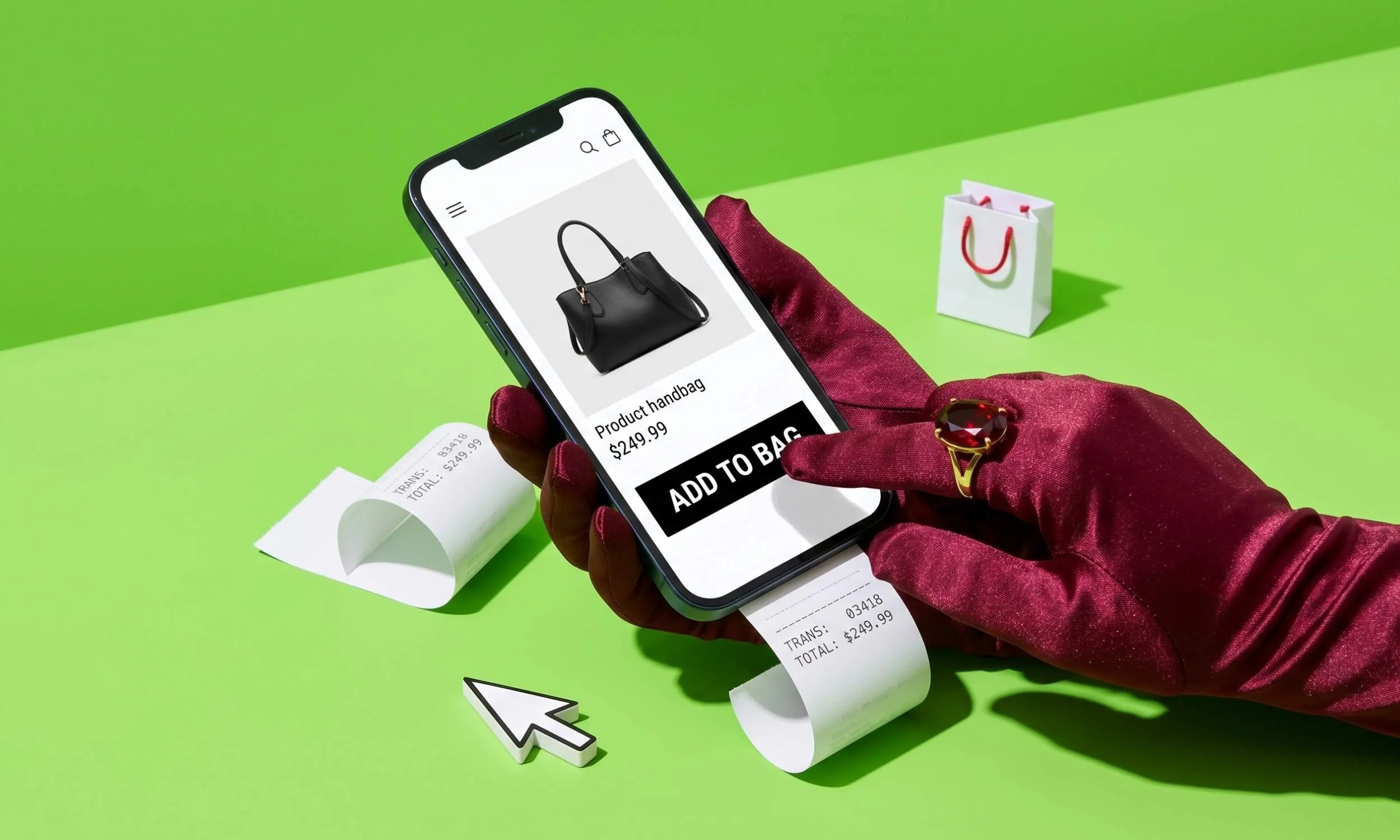
The visual hierarchy of an ecommerce store determines which products receive the impulse purchase consideration.
The neurology behind impulse buying
Impulse buying is fundamentally a failure — or a temporary suspension — of inhibitory control: the prefrontal cortex's capacity to override automatic, reward-driven responses from the limbic system. Consumer neuroscientist Antoine Bechara's research on decision-making demonstrated that dopaminergic reward systems respond to potential rewards before the inhibitory systems that evaluate consequences have finished processing.
What this means is that basically when a consumer encounters a product that triggers a strong reward signal — through novelty, beauty, scent, social signaling value, or simply through being in the right category at the right moment — the reward system fires first. What happens next depends on whether inhibitory control overrides it. Several factors reduce inhibitory control and, therefore, increase impulse buying probability.
Cognitive load
Research by Shiv and Fedorikhin (1999) published in the Journal of Consumer Research is one of the clearest demonstrations of how cognitive load affects impulse buying. Participants asked to memorize a seven-digit number (less favorable cognitions) were more likely to choose chocolate cake (more positive affects) over fruit salad (with less positive affects) at a snack table than participants memorising a two-digit number (more favorable cognitions). The additional cognitive demand reduced the prefrontal cortex's capacity for self-regulatory override.
In practical brand contexts, this means that complex, demanding, or friction-heavy customer experiences paradoxically increase impulse buying for secondary products — because the cognitive resources for deliberation are already occupied. It also means that any unnecessary complexity in a purchase flow reduces the buyer's available inhibitory capacity at critical decision moments.
Emotional arousal
Positive emotional states (like excitement, happiness, and arousal) increase impulse buying by activating approach motivation and reducing risk aversion. Research by Rook and Gardner (1993) found that consumers in positive moods were significantly more likely to make unplanned purchases. The mechanism is partly neurological (positive affect increases dopaminergic activity) and partly cognitive (positive mood reduces deliberative scrutiny).
Negative emotional states also trigger impulse buying, through a different mechanism: retail therapy. Research by Rick, Pereira, and Burson (2014) found that consumers feeling sad or experiencing a sense of lack of control used purchases to restore their sense of personal agency. Products that symbolically affirm individual identity or express personal taste are particularly effective retail therapy triggers.
Environmental triggers
Much of what drives impulse buying is not the buyer's internal state but the environment in which they encounter the product. Environmental psychology research has mapped many of the physical and sensory triggers.
Visual salience and display
Products placed at eye level are purchased more frequently than those above or below. Products at the ends of supermarket aisles (called endcaps) sell significantly more than the same products in-aisle. Research by Drèze, Hoch, and Purk from 1994 found that simply moving a product from a mid-shelf position to an eye-level position increased sales by an average of 35%, with no change to the product or its price.
In e-commerce, the equivalent is above-the-fold placement, featured product carousels, and “customers also bought” recommendations. The visual hierarchy of a digital interface determines which products receive the impulse purchase consideration that would be triggered by eye-level placement in physical retail.
Scarcity and time pressure
As discussed in our article about scarcity marketing, scarcity and urgency reduce deliberative decision-making and increase impulse purchases by activating loss aversion and narrowing the decision window. Rook’s foundational study from 1987 (linked earlier in the article) found that time pressure was a consistent feature of the impulse buying state — the urgency to decide now is part of what makes it feel like an impulse rather than a deliberated choice.
Product sampling and touch
Physical interaction with a product activates the endowment effect, the sense of partial ownership that increases perceived value and purchase likelihood. Research by Peck and Childers (2006) found that touch significantly increased impulse buying, particularly for products where texture and physical properties were relevant to quality evaluation. In-store sampling achieves a similar effect through taste and the partial consumption experience.
Social proof in the environment
Seeing others making purchases or viewing visible signals of demand — eg. queue length, empty shelf sections, a “bestseller” label — activates social proof mechanisms and increases impulse buying in wavering buyers. Another study by Childers and Rao from 1992 found that social influence was particularly strong for publicly consumed products, where the purchase carried social visibility.
The “impulse moment” is not random; it happens at a specific intersection of a buyer's internal emotional state and an external environmental trigger. Intelligent brands have a chance to design their brand in a way that influences both. The quality of the product's visual presentation, its sensory cues, and the context it's placed in all affect whether the impulse fires or doesn't.

About 75% of purchases in traditional impulse categories (eg. sweets, snacks, drinks) are now planned impulsive purchases.
Who impulse buys more?
Research consistently finds individual differences in impulse buying tendency. Angela Hausman found that impulse buying tendency correlates with hedonic shopping motivations, meaning people buy impulsively for pleasure and stimulation rather than strictly for need. In 1995, Rook and Fisher developed the Buying Impulsiveness Scale, which has been widely validated and shows consistent correlations with extroversion, positive affect, and lower conscientiousness.
As the population grows and times shift, new demographic patterns emerge consistently. However, younger consumers and those with higher discretionary income are still more prone to impulse buying in 2026. A well-known industry paper on socio-economic factors as a part of impulse purchases by Michael Wood has been confirmed and extended by more recent research in the digital context.
A more recent 2023 systematic review in the International Journal of Consumer Studies identified age as one of the strongest individual-difference predictors of impulse buying tendency across both physical and online retail. Digital-native peers amplify the result: a 2022 study in Frontiers in Psychology found that social media use was a significant predictor of online impulse buying in Gen Z consumers, with 60–61% of Gen Z and millennials reporting that social media exposure directly triggers unplanned purchases. Another study by GWI found that 48% of daily TikTok users make spontaneous online purchases.
The same platform-specific concentration of the visual stimulus-to-impulse pathway Rook described in physical retail repeats itself four decades earlier, even in digital environments. The neurological basis for age differences also explains this phenomenon; the prefrontal cortex governing inhibitory control is not fully mature until the mid-twenties. What has changed is the scale and frequency of the trigger environment that younger consumers now inhabit.
Impulse buying online
The psychology of online impulse buying shares mechanisms with physical retail but has important differences. Research by Verhagen and van Dolen (2011) found that website pleasure (positive aesthetic and emotional response to the site experience) and website arousal (degree of stimulation produced by the site) were both significant predictors of online impulse buying — direct parallels to the atmospheric and sensory variables in physical retail.
The specific mechanisms that increase online impulse buying include:
Reduced deliberation time: One-click purchasing, saved payment details, and streamlined checkout reduce the time available for inhibitory control to override an impulse.
Algorithmic recommendation systems: “You might also like” and “frequently bought together” systems are systematically designed to surface products with impulse purchase potential at high-consideration moments.
Social proof integration: Review counts, purchase frequency signals, and real-time activity indicators (“12 people are viewing this now”) replicate social proof mechanisms from physical environments.
Scarcity notifications: Low stock alerts and time-limited offers create the urgency dimension that characterises the impulse buying state in physical environments.
What this means for brand strategy and brand design
The psychology of impulse buying has several specific implications for brand and product experience design:
Visual identity quality matters at the point of encounter. A product that communicates quality and desirability through its packaging and visual presentation triggers stronger initial reward responses than one that does not. The impulse happens before deliberation — it happens at the moment the product is seen.
The first moment of encounter is a brand strategy issue. Whether that moment is a shelf position, a website hero image, a social media post, or a product placed near a checkout, its design determines whether a reward response fires. Investment in that first visual impression pays dividends in impulse purchase rate.
Reducing friction in the purchase moment amplifies impulse buying for products that have already triggered desire. If the path from “I want this” to “I have purchased this” is smooth, fast, and cognitively light, the conversion of impulse into purchase is higher.
Emotional context of the brand experience affects impulse buying readiness. Brands that create positive emotional arousal through their environment, communication, and experience put buyers in a state that is more receptive to unplanned purchase decisions.
These principles apply to both physical and digital brand environments. If you're designing a brand experience that needs to convert at the moment of encounter, explore our branding services or learn about how we approach brand strategy.
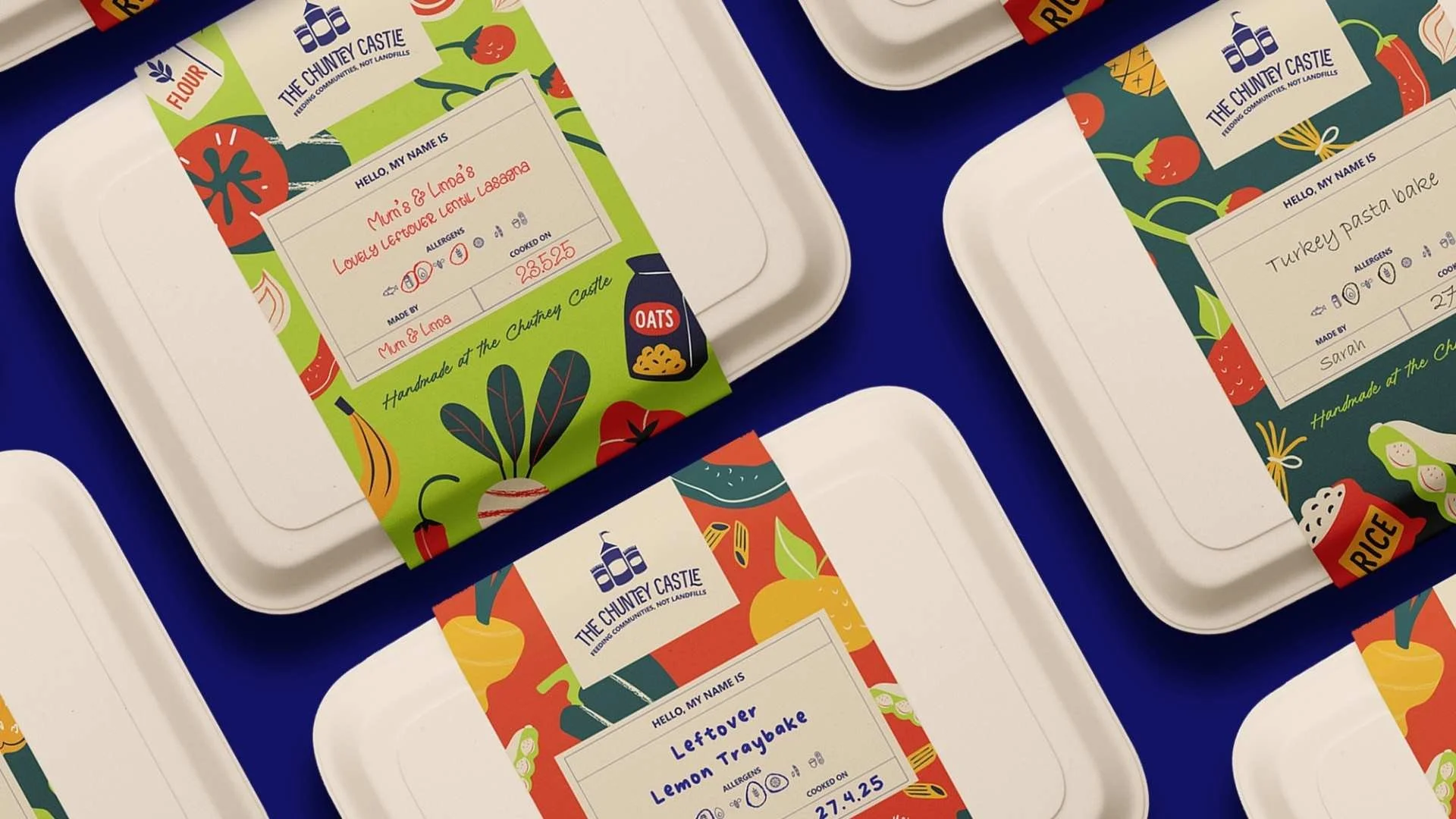
Packaging I designed for Chutney Castle that uses endowment effect to help fight food waste.
Frequently asked questions
What is impulse buying?
Impulse buying is an unplanned purchase made in response to a sudden urge triggered by encountering a product in a shopping environment. It is characterised by spontaneity, a sense of compulsion, emotional arousal, and reduced deliberation. It accounts for a large proportion of all retail purchases and is systematically influenced by both buyer psychology and environmental design.
What causes impulse buying?
The primary causes are a combination of internal factors, such as positive or negative emotional arousal, cognitive load that reduces inhibitory control, and individual impulsiveness tendency. Also external triggers, including visual salience, scarcity signals, social proof, sensory stimulation, and reduced purchase friction, drive impulse purchases. Environmental design is the most controllable variable.
How does impulse buying work in online shopping?
Online impulse buying follows similar psychological mechanisms to physical retail but operates through digital equivalents: algorithmic recommendations, one-click purchasing, scarcity notifications, social proof signals, and website aesthetics that create positive emotional arousal. Research finds that website pleasure and arousal predict online impulse buying in the same way that physical environment atmospherics predict in-store impulse buying.
Is impulse buying irrational?
Impulse buying is the outcome of predictable psychological processes — reward system activation, reduced inhibitory control, and emotional state influence — rather than arbitrary irrationality. Many impulse purchases produce genuine satisfaction. Research by Rook and Fisher (linked earlier in the articles) found that impulse buyers do not consistently report regret, and that normative evaluation of impulse buying (whether the buyer considers it appropriate to their situation) moderates whether regret follows. The “irrational” framing misunderstands how human decision systems actually work.
Get more updates from Ainoa in your Google News feed.
Articles on our blog may contain content drafted with the assistance of AI tools, always reviewed and polished by Ainoa's team.