Quick Summary
Malbon Golf redefined golf as a lifestyle product by importing the visual language and cultural credibility of streetwear, then backing it up with genuine collaborations and product design.
Eastside Golf built golf's first genuinely community-led brand by centering Black culture and values, turning a niche identity position into a platform that attracts mainstream audiences.
Both of these brands operate on the same psychological principle: in-group bias, the tendency for people to favour brands and products associated with groups they identify with or aspire to join.
These brands are not competing with legacy players on their terms. They are competing on a completely different axis: community, identity, and the psychological signal of belonging.
Legacy golf brands cannot copy this approach because their structural investments in heritage positioning actively prevent them from authentically speaking to younger audiences.
Three golf brands have spent the last five years proving something that legacy golf brands are still not accepting: golf was never the sport the traditional brands were selling. They were selling a membership. The new brands are selling something completely different: community, identity, and the freedom to belong without credentials.
The story started with Malbon Golf in Los Angeles and continued with Eastside Golf in New York, and further accelerated globally. Neither of them has a century of heritage or claiming to be a traditional golf brand. Still, both of them are taking significant market share from brands with infinitely more resources, because they are answering a question that legacy brands stopped asking: what does golf actually feel like to the people learning to play it now?
The answer is not what the traditional golf industry assumes.
Malbon Golf was built around a modern lifestyle
Malbon Golf launched in 2017 from Los Angeles with a clear design mission: treat golf the way the streetwear world treats culture. They saw golf not as a sport with a dress code, but as a lifestyle identity that people wanted to publicly affiliate with.
Their visual strategy was calculated and structural; rather than adopt the visual brand color palette from country clubs (green, golf and white), Malbon adopted the visual language of contemporary Los Angeles streetwear. Bold, saturated colors and prints, paired with lean typography with genuine personality. Their photography highlights golf being played the way their target audience actually plays it: casually, socially, on weekends, with friends who might have just met them that day.
These design choices all had a strategic reason. The built visual image signals that the brand was not for the traditional golf audience, but explicitly, unapologetically for people who came to golf from outside the category, who saw it as a social activity, not a sport with institutional requirements. Malbon’s visual brand communicates to its audience clearly that you do not need to know everything about golf, wear the right clothes, or understand the traditional game. You only need to care about being around your people and having a good time.
This is a direct application of what psychologist Henri Tajfel called in-group bias — the tendency for people to favour products, messages, and groups they identify with or aspire to join. Like all great brands, Malbon did not try to appeal to everyone. It explicitly signalled belonging in a specific tribe: people who wore streetwear, understood design-forward brands, cared about collaborations and limited drops, and saw golf as a social scene rather than a scoring game. By being specific about who the brand was for, Malbon made itself irresistible to exactly that audience.
Malbon backed up the identity with a product strategy that legacy brands find structurally difficult. Limited collaborations, capsule drops instead of full collections and partnerships with other lifestyle brands to build a creative ecosystem around streetwear culture rather than sequestering golf into its own category. These moves communicated something fundamental: this brand lives in the real world, not in golf's invented bubble.
The result was not a golf brand that got a facelift to appeal to younger audiences, but a strong brand built by people who grew up in streetwear culture and happen to care about golf. This distinction actually matters, because the first one described is a costume and will only lead to brand erosion in the long term. The other is authentic, and the results are clear.

Malbon is in its own words “built by the people who shape it, and driven by what’s still to come”, and it shows.| Image: Malbon Golf.
Eastside Golf’s community-first positioning
Eastside Golf knew that Black Americans have always loved golf, but existing golf branding has never reflected that. Golf's typical visual language, the athletes it featured, and the values it claimed to represent all signalled that golf was a white sport, a sport with gatekeepers, a sport where the casual observer knew they were not welcome.
To counter this industry-wide narrative, the brand narrative was centered on authenticity and representation in Black golf culture, embodied by its iconic “Swingman” logo. The logo featuring a Black man in jeans, a sweatshirt, and a gold chain was created by co-founder Olajuwon Ajanaku to challenge the sport’s rigid dress codes and reflect his own identity as a professional golfer. While the brand draws deep inspiration from the broader Black American experience, its mission focuses on shifting the culture and providing a sense of belonging for a demographic that the golf industry has historically overlooked. This strategic decision put the culture at the centre of the brand, instead of decorating around it inauthentically.
By blending streetwear aesthetics with traditional golf, Eastside Golf aims to break down the barriers that have long excluded youth and non-golfers from the game. The brand’s visual language skilfully mixes streetwear and contemporary urban aesthetics with intentional references to Black cultural traditions. The photography also features Black golfers as the default, not just as a DEI rule or decoration, signalling golf is for everyone. All of this makes Eastside Golf’s strong community-driven brand a strategically valuable business asset that is built into the product strategy, the partnership strategies, and the way the brand talks about itself through marketing campaigns and employee handbooks.
The brand's 2025 partnership with Nike confirmed that their brand positioning was not a niche position that only appealed to Black audiences. By being genuinely specific about who the brand was centred on, it created a platform that attracted mainstream audiences precisely because it offered something authentic that mainstream golf culture had never provided. Eastside Golf has built a strong position as a brand for people who want to belong to a community that feels real and not a country club pretending to be inclusive.
This is the extended self in operation — the concept established by Russell Belk in his 1988 research on possessions as extensions of identity. When you wear or buy something from Eastside Golf, you are publicly aligning yourself with the values and community that the brand represents. For the audience that came to golf from outside traditional pathways, this narrative is arguably profoundly powerful. You could belong to the community as who you are, without pretending.
Legacy golf brands have attempted to address the diversity conversation by creating sub-brands or launching limited inclusive lines. This approach treats diversity as a marketing problem to be solved with representation. Eastside Golf proved that diversity is not a problem itself, but the current platform is. Build the brand from the community rather than for the community, and the brand stops feeling like representation and starts feeling real.
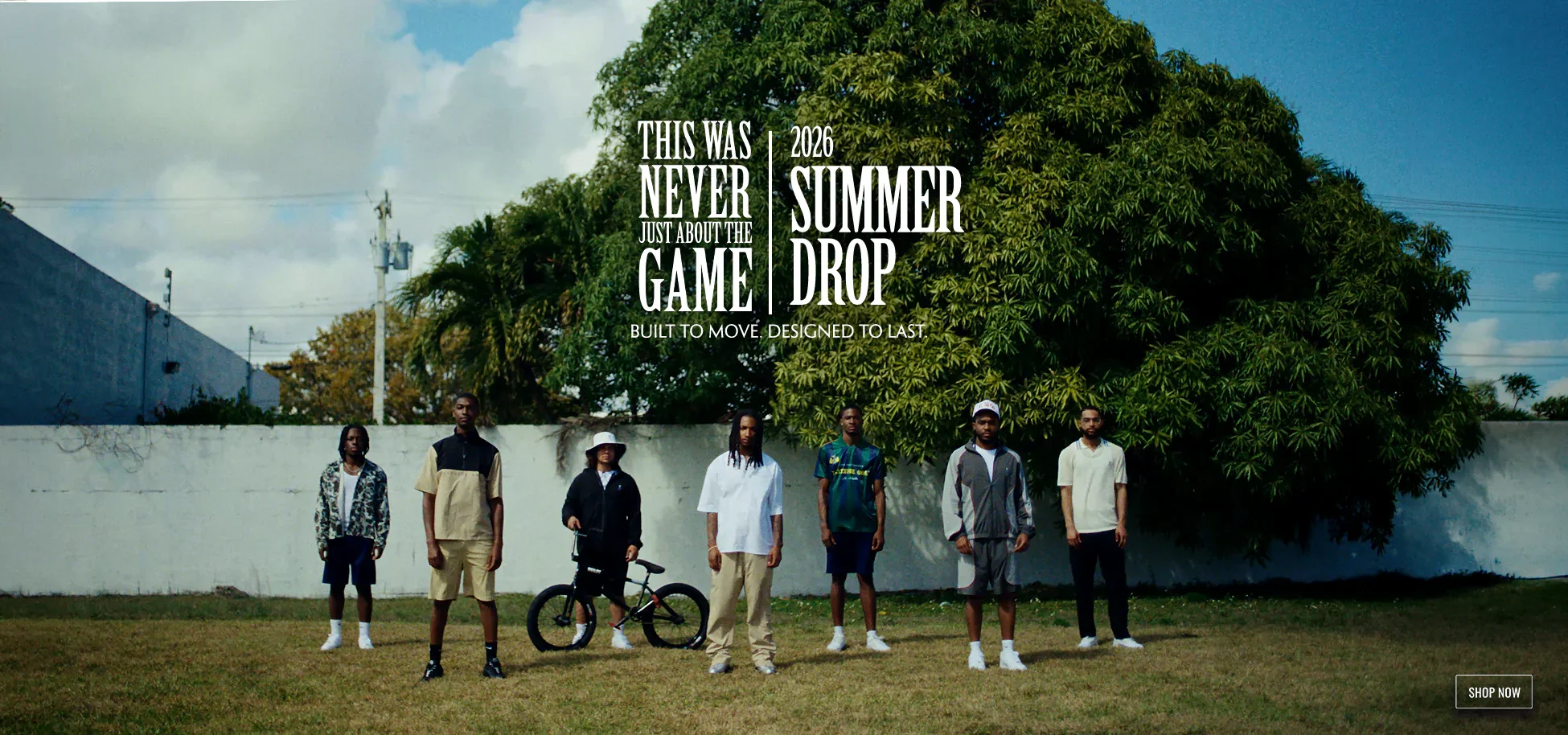
Eastside Golf is known for its drops and capsule collections. Their latest summer drop “reflects the intersections of style, community, and lived experience, revealing a brand rooted in movement beyond boundaries”.| Image: Eastside Golf
The pattern underneath: tribalism, identity, and belonging
Both Malbon Golf and Eastside Golf utilize three overlapping psychological principles that help to explain why their positioning is so structurally strong:
In-group bias describes the tendency for people to favour members of groups they identify with and to prefer products and messages associated with those groups. Both brands are explicit about who they are for. Malbon is for people who speak streetwear and skate culture, and Eastside Golf is for people who feel outsiders to the “White old golfers” narrative.
In being specific, each brand becomes powerfully attractive to exactly those audiences. Neither of them necessary have a superior product (even though the product quality is arguably great), but because the brand is signalling group membership. This principle — that consumer psychology shapes purchase decisions around identity and belonging — is crucial to understanding how these brands keep on winning.Aspirational identity is another consumer psychology concept that proves that people do not just buy what they are, but what they want to become. Malbon’s brand functions as an aspirational identity marker, and wearing the brand signals: “I am the kind of person who understands streetwear, who cares about design collaborations, who is secure enough in my golf to treat it as social rather than scoreable”. Eastside Golf also leans on this similarly; you buy the brand because the identity they represent is the identity you want to project. The product is the mechanism through which you signal that identity.
The endowment effect explains why traditional golf brands are structurally trapped. The endowment effect says that once you have invested in an identity, you overvalue it and resist change. Legacy golf brands have invested decades in the country club positioning. So their entire distribution infrastructure, marketing strategy, product story, retail partnerships — all of it is built around that positioning.
To authentically shift toward an inclusive, community-led, less formal positioning would require abandoning that infrastructure and could risk brand cannibalization(meaning the new products or brand identity would sink their sales as their existing audience doesn’t align with the new brand or products). Instead, they hedge by launching sub-brands, creating younger lines, issuing diversity statements without ever actually changing what the main brand is for. The identity is too invested in, and they cannot let go.
The new generation of golf brands never had this constraint in the first place, as they started from zero with a point of view. No prior investment in the old identity or structural requirements to protect a legacy audience. Both of these hyper-successful brands had the complete freedom to build for the market that actually exists now, rather than the market that existed when their competitor was founded in 1985.

Apex Pro’s taglines remind the audience that golf is more than the scorecard.
What legacy brands keep getting wrong (and why they can't fix it)
The traditional golf industry has noticed the shift, and it shows as bigger, more well-known brands, like Adidas, have launched Gen Z-targeted sub-brands, and many established sports and golf retailers have made space for modern brands that younger audiences actually want. Seemingly, the conversations in boardrooms have moved from complete denial to concern to desperate strategy adjustments. But the structural problem remains unsolved.
Legacy golf brands are trapped by what they have already built. Salla, the founder of Ainoa (a psychology-led branding studio specializing in identity-driven brands), describes the traditional golf space accurately: “Prestige-driven, overly technical without fully explaining anything behind it, a lot of jargon that scares away many new golfers, and always the same lazy colors like beige, cream, green, gold. Most legacy brands are still trying to sell golf as a boys club with cigars, money and prestige.”
That was a conscious choice that sort of made sense back in the day when societies were more class-driven, where golf was accessible only to a few and selected. It was the right choice, then — a clear positioning for a specific audience that understood and wanted exactly those signals. The problem is that the audience has changed, and the positioning has remained locked in place.
The legacy brands' response has been to diversify without transforming, leading to brands like Vice Golf, Malbon and Eastside Golf taking market share quite effortlessly. And legacy brands’ response has not been to radically rethink what the main brand is for and how it evolves with the world, but instead, many legacy brands have opted to launch limited lines for younger players, acknowledging diversity (often through surface tactics), and hope the core audience remains loyal while also somehow appealing to new audiences. It is structurally incoherent, and especially younger customers can feel it immediately.
There is also the specific problem of legacy authenticity; if a brand was built on country club positioning, and that brand suddenly claims to be inclusive and community-led, it reads as marketing opportunism, not a genuine shift. As a result, the younger audiences smell the inauthenticity and don’t buy, and the older audiences feel abandoned and might even shift to a competitor after being loyal for years. In the end, the brand satisfies no one.
This is why Salla notes: “It’s understandable that legacy brands keep on repeating the same playbooks and don't want to alienate their legacy audiences. However, in the meantime, brands like Vice Golf are taking more and more market space and eventually, competition becomes more and more costly for the legacy brands. The legacy position is literally preventing the legacy brand from authentically speaking to new audiences. That is a structural trap with no easy exit, because you cannot have it both ways. You can be the traditional heritage-led golf brand, or you can be a community-led lifestyle brand. You cannot authentically be both simultaneously.”

Visual brand identity we built for Apex Pro reflects the audience it was built for, Gen Z and Younger Millennials that have a whole different approach to golf than their grandparents had.
If you're building a golf brand now, this is for you
If you’re planning on launching a golf brand now, you’re entering a category with clear market gaps and proven pathways. New generation of brands can succeed; it has already been proven. The real challenge you’ll face is what positioning is still available, and what audience genuinely needs something that does not yet exist.
Legacy brands have already demonstrated the avoidable mistakes repeatedly, and we’ve also covered some of them in this article, but here are a few of the tips summarized:
Do not try to appeal to everyone. When you try to speak to everyone, you speak to no one.
Do not claim heritage you haven't earned. You likely can’t claim heritage status if your golf brand is established in 2026.
Do not treat diversity as a marketing tactic, focus building diversity into the overall business and brand strategy.
Do not treat design as a bandage for strategic confusion. Your logo and visual identity should always be built last.
And crucially: do not be trapped by what you think golf should be. Study what it actually is for the people showing up to play it and find your true gap.
The founders in this space now who are going to build durable brands are the ones Salla describes accurately: “The golf founders we talk with are all future-forward, tech enthusiasts, all about wellbeing, really smart. Golf is no longer seen as high-end and luxurious as it was for boomers. It's more about well-being, having fun, networking, and hanging with friends. Many of the modern leisure golfers who present the majority of the golf industry don't take themselves too seriously.”
That last sentence is key. The new generation of golf brands succeeds because they do not have the identity burden of protecting tradition. They can speak to golf as it actually exists now: a wellness activity, a social sport, a way to spend time with people you care about in a place that makes you feel good.
The brands building on that foundation are the ones that will own the next decade of golf. The bigger budgets or longer histories don’t necessarily win in 2026 and beyond. Golf bands that win understand something that legacy brands are still struggling to accept: the value is not in the prestige, and it never was. The value was always in the community. When you build authentic branding around real community rather than inherited prestige, you create something that lasts.
The opportunity is still on the table
If you are building a golf brand right now, the market is not closed. Malbon and Eastside Golf have both proven the blueprint, and if you play your round right, it’s yours to take, too. None of the modern golf brands has claimed every position nor saturated the market with community-led, design-forward, authentic positioning.
The next generation of golf brands will succeed by being even more specific about who they are for, even more genuine about what they believe, and even more willing to completely abandon the visual language of heritage golf branding. The ones that get that right will not just capture market share, but they will define what golf looks like in the future.
If you’re building a next-gen golf brand and need help with strategic branding, we’d love to have a chat. No commitment, no sales pitch. We only send you a pitch after our discovery call if it actually makes sense.
If you liked this article, these articles might interest you as well:
Apex Pro Case Study: How we found the biggest market opportunity in the golf market for a Finnish golf brand
How to Start a Golf Brand: Our quick start guide to brand positioning, strategy and how to build a strong ecommerce golf brand.
Golf Branding in 2026: Read our essential brand playbook for new golf brands and learn why getting brand identity right matters more in the golf market.