What Is Sensory Marketing and How to Create Unforgettable Brand Experiences for all senses
Quick Summary
Sensory marketing is the strategic use of sensory stimuli (sound, scent, touch, taste, and visual texture) to shape how a product or brand is perceived and experienced. It mostly works unconsciously, which is precisely why it works.
Our senses are not separate from each other. Cross-modal correspondences mean that what you hear changes what you taste, what you touch changes what you see, and what you smell changes what you are willing to pay.
Sensory pairing is one of the most effective digital applications of sensory marketing. Brands like Rhode built product desire primarily through visual associations with honey, glazed textures, and specific fruits, triggering anticipated sensation before the product was ever touched.
Digital environments have sensory dimensions that most brands don’t utilise: sound through video and audio advertising, visual-haptic feedback through animation and micro-interactions, and environmental atmosphere through the density and hierarchy of visual information.
Sensory consistency across touchpoints compounds over time. A brand that makes the same sensory impression in every context — online, in packaging, in physical space — builds associations faster and more durably than one that treats each touchpoint as a separate design decision.
If you happen to walk into any Lush store around the world, you will most definitely smell the brand before you see it. The scent of essential oils, fresh ingredients, and handmade cosmetics flows into the corridor outside. This is a deliberate, consistent part of how Lush signals who it is as a brand and what it makes. If you’ve ever walked past one of their stores, there’s also a strong chance you might have wrinkled your nose a teensy bit as you read that; that imprinted sensory memory alone is so strong.
Let me take you for another stroll. Let’s visit any flagship Apple Store. If you breathe in, what do you smell? That’s right. Nothing. The absence of scent is also a choice. Clean air reinforces the product's design-forward minimalism and the sense that you are entering a space where the only things that matter are the objects on the tables.
Sensory marketing is the discipline of designing brand experience through multiple senses — not just visual identity, but scent, sound, texture, taste, and the full range of physical and environmental cues that shape how people feel about a brand. The research behind it is more significant (and interesting) than most marketers even realise.
What is sensory marketing?
Sensory marketing (definition)
A marketing approach that deliberately engages consumers' senses (sight, smell, hearing, touch, and taste) to influence perceptions, emotions, and purchasing behaviour. It combines neuroscience, consumer psychology, and brand strategy research.
Consumer neuroscientist Aradhna Krishna, whose 2012 review in the Journal of Consumer Psychology is among the most cited works in the field, defines sensory marketing as “marketing that engages the consumers' senses and affects their perception, judgment, and behavior.” The key insight in Krishna's framework is that sensory inputs are processed largely non-consciously, shaping mood, memory, and preference before the deliberate mind has a chance to evaluate them.
This is surprisingly important for brand strategy and marketing activities following it. Often, brand investment goes into visual identity and verbal messaging, like what the brand looks like and says. Sensory branding asks what the brand feels like, sounds like, and smells like, and whether those inputs are consistent with the brand's intended positioning.

Even though you’re not physically able to touch the objects in the image above, your brain still fills in the gap, and as a result you know what touching these objects would feel like.
The neuroscience behind sensory brand experience
Sensory inputs (particularly smell and sound) bypass the deliberative processing pathways in the brain and connect more directly to the limbic system, which governs emotion and memory. This is why a particular scent can take you back to a specific memory in an instant (like a Lush shop!), and why a piece of music can change your mood before you have consciously identified what you are hearing.
Research by Morrin and Ratneshwar (2003) found that ambient scent in retail environments improved both memory for brand names and evaluation of brands, even when the scent was unrelated to the products being sold. The scent created a positive emotional context that generalised to the products encountered within it.
For brand experience design, the environmental sensory inputs act as mood peaks that affect how all following information is processed. Entering a store that smells pleasant and sounds right creates a more receptive evaluative state than entering one that smells neutral or sounds jarring, and that receptive state affects how products are assessed.
Based on my extensive experience in branding, most brands think about brand experience in terms of what customers see. But the moment a customer walks into a space, picks up a product, or hears a piece of music associated with a brand, they're receiving information that shapes their perception long before the rational evaluation begins. A lot of brands forget to consider the spaces as a whole where their brand is being experienced, and this leads to an inconsistent brand experience.
Scent marketing and the psychology behind it
Scent is the sensory channel with the strongest and most consistent research support in marketing contexts.
Spangenberg, Crowley, and Henderson (1996) conducted one of the earliest controlled retail scent studies, finding that ambient scent in a clothing store increased positive evaluations of the store, product quality, and merchandise, and reduced the time shoppers felt they had spent in the store. And some time after that, Morrin and Ratneshwar (linked above in the previous chapter) found that pleasant ambient scent improved memory and brand evaluation even for unfamiliar brands.
Research by Mattila and Wirtz (2001) found that the arousal level of ambient scent interacts with music arousal level, meaning that harmonious sensory environments (either both high-stimulation or both low-stimulation) produced more positive evaluations and more purchasing than those lacking harmony. This congruence principle is important: a relaxing spa scent combined with fast, energetic background music creates dissonance that diminishes both signals.
Scent sensory marketing examples:
Singapore Airlines uses a patented fragrance called Stefan Floridian Waters across its cabins, worn by flight attendants and diffused in hot towels. The scent has become part of how passengers experience and remember the brand.
Nike has incorporated scent in retail stores, with research (reported in a Nike-commissioned study by the Smell & Taste Research Foundation) showing increased purchase intent in scented vs non-scented conditions.
Abercrombie & Fitch built its entire retail environment around heavy fragrance application, making scent the most immediate and recognisable signal of its brand. This strategy has defined the brand’s appeal for a specific demographic for two decades.

Perfume ads traditionally use sensory marketing to visualise the scent. | Image: Prada Fragrances
What is sound branding? Research and real examples
Sound branding (also called audio branding) covers everything from music in retail environments to sound logos (also known as sonic logos) to the sounds products make when they are used.
One of my favourite consumer psychology studies by North, Hargreaves, and McKendrickshowed that background music in a wine shop affected product selection drastically. When French music played, French wine outsold German wine, and in return, when German music played, the opposite happened. Interestingly enough, shoppers were not consciously aware of the music influencing their choices. Only one shopper out of 44 mentioned the music as a reason for their purchase, and when asked directly, 86% of the shoppers said the music didn’t influence their purchasing decisions at all.
Sound doesn’t only influence purchase decisions, but also how products are evaluated. A 2024 research by Zampini and Spence found that the sound of a crisp being bitten into affected how fresh and crunchy participants rated the crisp. The louder, higher-pitched crunch sounds generated higher freshness ratings. The product's sound was part of the product's perceived quality.
Sound sensory marketing examples:
Intel's five-note sound logo (the “bong”) is one of the most recognisable audio signatures in the world, consistently used across thirty years of advertising to anchor the brand in memory.
McDonald's “I'm Lovin' It” jingle, adapted into dozens of cultural versions globally, demonstrates how a short audio signature creates immediate brand recognition that functions independently of visual cues.
Mastercard's sonic identity project, launched in 2019, created a comprehensive audio brand including a main melody adapted for different genres, contexts, and markets — covering everything from ad soundtracks to the sound produced at point of sale.
The Porsche engine sound was engineered as part of the brand experience. Research showed customers valued the sound as much as performance metrics, leading to deliberate acoustic design in electric models to preserve a sonic signature without combustion engine noise.
Touch and haptic marketing
Haptic perception (the sense of touch and physical interaction) is a significant driver of product evaluation and purchase intention. Research by Peck and Childers found in 2003 that the need for touch (also shortened NFT — I know, how confusing abbreviation in 2026) varied significantly across individuals, with high-NFT consumers showing markedly lower confidence in product evaluations when they could not touch the product.
Texture also communicates quality. Heavier products are evaluated as higher quality, packaging that feels premium signals the product inside is highly valuable, and a business card printed on thicker cardstock creates a different impression than one on thin, limp card — long before the recipient has read what is printed on it.
Research by Krishna and Morrin (2008) found that the haptic quality of a container influenced taste evaluations: beverages in firm cups were rated as better tasting than the same beverage in flimsy cups. The cup's physical quality bled into the product's perceived quality.
Touch sensory marketing examples:
Apple's product packaging is designed to make the unboxing experience feel deliberate and premium. The resistance of the lid, the feel of the materials, and the way components are arranged are all part of the brand experience — not afterthoughts.
Moleskine notebooks use a distinctive elastic band closure and a specific paper texture that have become inseparable from the brand's identity. The physical feel of the product reinforces the brand's creative, artisanal positioning.
IKEA's showroom design allows customers to sit in chairs, lie on beds, and open cupboard doors — creating physical familiarity with products that increases purchase likelihood compared to catalogue or screen-only browsing.
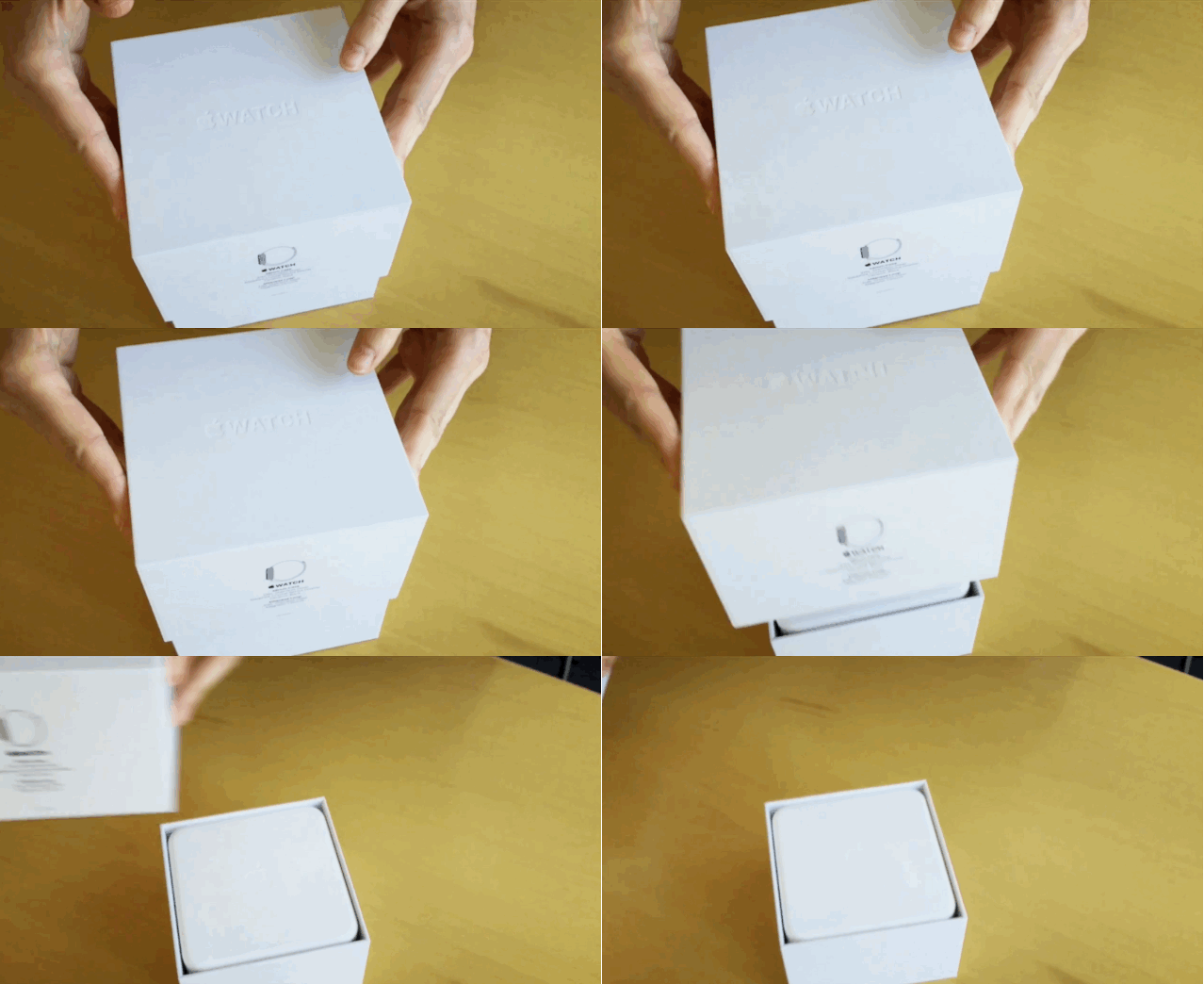
Apple’s product boxes are known to open slowly intentionally. Apple Watch unboxing by Alex Heath, Cult of Mac.
Visual sensory marketing is more than logos and colours
While most branding attention goes to visual identity, sensory marketing reframes visual inputs as part of a broader environmental experience. Research on atmospherics (retail environment design) shows that lighting, spatial organisation, colour temperature, and visual density all affect mood, time spent in the environment, and purchasing.
Kotler's industry-famous paper from 1973 on atmospherics was the first study to systematically examine how retail environments function as marketing tools. Decades of research after this pioneering paper have extended this theory to restaurant design, healthcare environments, hotel lobbies, and digital environments. Still in 2026, the main principle that physical or visual context shapes the evaluation of everything encountered within it has stayed the same.
For brand identity design, this means visual systems need to consider the environments in which they will appear. A visual identity that works on a laptop screen may perform differently on a retail shelf, a trade show booth, a product package, or a mobile screen. The environmental context of each touchpoint is part of the brand's visual sensory experience.
Sensory marketing for digital and visual-only brands
One of the more visible expressions of sensory marketing in recent years has been sensory pairing — using visual association to prime the sensory experience of a product before it's ever touched or tasted. The logic has existed, for example, in drinks advertising for decades: condensation on a glass, sliced citrus, ice. The visual shorthand for cold, fresh, and sharp is so established that it barely registers as a marketing tactic.
What brands like Rhode did was apply the same logic with much more deliberate specificity. Rather than generic freshness cues, Rhode paired its lip products with honey, glazed pastries, and specific fruits — each chosen to communicate a precise texture and sensation. Before the product is even opened, the buyer has already formed a sensory expectation of what it will feel like. The visual image does the work that physical touch cannot, and it works because the brain processes anticipated sensation and actual sensation through overlapping neural pathways.
ASMR followed a related logic from the audio direction — brands including IKEA and various food companies produced content specifically designed to trigger physical responses through sound: the crinkle of packaging, the tap of a surface, the deliberate texture of ambient sound. In both cases, the sensory experience being marketed is real, but the delivery channel is entirely digital.
The obvious objection to sensory marketing for many brands is that they operate primarily or entirely online, and they don’t have a retail space or have no need for tactile packaging. Fair enough, but how can you utilise sensory marketing in that case?
Well, digital environments have their own sensory dimensions, and most of them are underdesigned. Sound is increasingly available as a brand tool through video content, social media audio, notification sounds, audio ads on Spotify and YouTube, and so on. Animation and micro-interactions (like a button that looks like it’s vibrating) create a kind of visual-haptic feedback that communicates responsiveness and quality. Also, the density and placement hierarchy of visual information on a website create an environmental feel about the brand as a whole. High-quality product photography communicates texture and material properties even when the product cannot be touched.
Biocca and Harms concluded already in 2002 that the presence in digital environments shows that the sense of being “in” a digital environment can be enhanced through multisensory harmony, which can be achieved through consistent visual, audio, and interaction design. Brands that create coherent, deliberate digital environments outperform those that treat each touchpoint as independent.
Any brand (physical or digital) should consider how senses are activated across every touchpoint a customer encounters. Are the non-visual signals we're sending consistent with the brand we're trying to build?
If you're developing a brand identity or thinking about rebranding and want a specialist who is able to consider the full sensory system, not just the logo, explore our branding services or read about how we approach brand strategy.
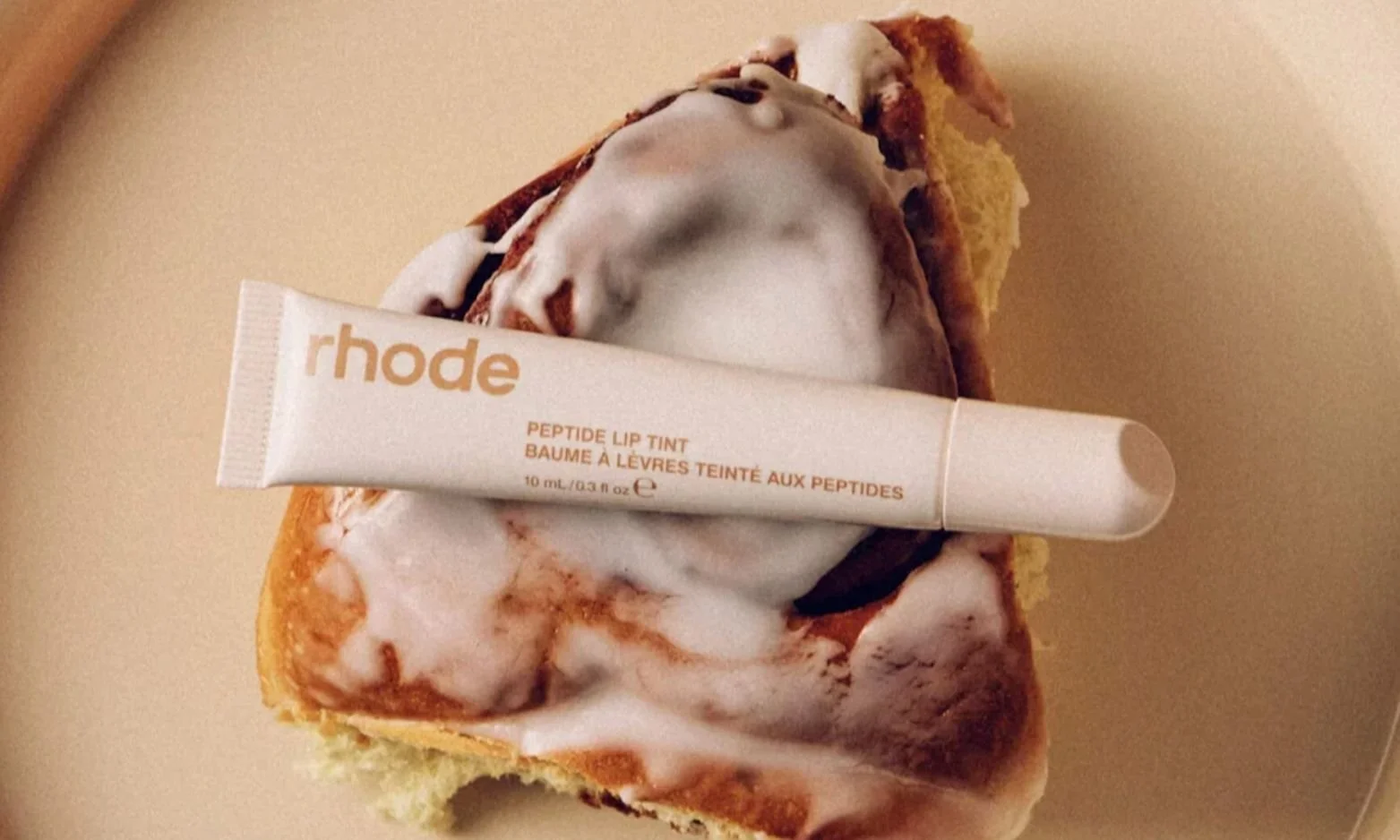
Rhode made sensory marketing visible via their “food sensory marketing” campaigns on socials and web. | Image: Rhode
Frequently Asked Questions
What is sensory marketing?
Sensory marketing is the intentional use of sensory inputs (scent, sound, touch, visual cues, and taste) to shape how consumers feel about a brand and influence their purchasing decisions. It draws on consumer neuroscience and psychology research to design brand experiences that work beyond verbal and visual messaging.
What are the best examples of sensory marketing?
Among the most studied and replicated examples are Singapore Airlines' proprietary cabin scent (Stefan Floridian Waters), Intel's sonic logo, Apple's haptic packaging design, Nike's scented retail stores, and Mastercard's comprehensive audio branding system. Each demonstrates deliberate, consistent application of a single sensory channel as part of a coherent brand system.
Does sensory marketing work for small brands?
Yes, at some scale. A small brand may not be able to invest in a proprietary scent or a full audio brand. But it can choose consistent background music for events, design packaging that feels as good as it looks, make deliberate choices about the sensory environment of any physical space it uses, and ensure its video content has a consistent audio signature. The principle is intentionality, not budget.
What is sonic branding?
Sonic branding (also called audio branding or sound branding) is the deliberate use of music, sound, and audio signatures to build brand recognition and emotional association. It includes sonic logos, brand music guidelines, the sounds products make in use, and in-store or in-environment audio. Research shows that consistent audio cues improve brand recall and can influence purchase decisions independently of visual identity.
Get more updates from Ainoa in your Google News feed.
Articles on our blog may contain content drafted with the assistance of AI tools, always reviewed and polished by Ainoa's team.