Quick Summary
A brand is not a logo. It is a collection of emotional, rational, and identity-based associations that people hold about a business. A visual identity simply gives those associations a surface expression.
Commissioning a logo before establishing a strategy leaves you with an empty container. The right sequence is strategy first, identity second, system third, execution fourth.
Every brand needs to perform three psychological jobs: create mental availability (coming to mind at the moment of purchase), build trust through consistency, and signal identity fit for the buyer. Missing any one of these limits the commercial leverage the brand can create.
Mental availability, as defined by Sharp and Romaniuk, is not the same as awareness. A buyer can know a brand exists and still not reach for it. Distinctiveness builds real salience, and salience drives choice.
Starting with a logo, tagline, or competitor research each produces a specific, predictable failure. The right starting point is a positioning question answered with precision, not a design brief.
If your current brand feels ineffective, skip the design updates and start with a diagnosis. Layering more execution on top of a weak foundation compounds the problem rather than solving it.
The most common way businesses build brands is to hire a designer, get a logo, pick some colours, build a website, and call it done. It makes sense — visual outputs feel like progress in a way that strategic thinking does not, and a new logo is something you can point at. The problem is that a logo is not a brand. A logo is a container. What your brand actually means, how it makes people feel, and what it signals about the buyer depends entirely on everything else. And if “everything else” was never worked out, the container is empty.
Building a brand properly means doing the psychological work first. It means answering questions about identity, meaning, perception, and trust before picking a colour palette or writing a tagline. The design work translates the strategic thinking into visual and verbal form. When it is done in the right order, the result is a brand that holds together: a business that looks like what it is, says what it means, and is experienced consistently across every touchpoint. When it is done backwards, you get a business that has a visual identity and nothing underneath it.

Visual identity is just the visual output of brand strategy. This packaging design for Chutney Castle utilises multiple psychological tactics to reduce food waste.
What a Brand Actually Is
Brand (definition)
A brand is the set of associations (emotional, rational, and identity-based) that a person holds about a business, product, or organisation. It is not the logo, the colour palette, or the website. It is what lives in someone's mind when they encounter the name: what they expect, what they feel, what they believe it says about them to choose it. The visual and verbal identity is the surface expression of this — the system of cues that triggers and reinforces the associations over time.
This definition matters because it changes what brand-building is. If a brand is a set of associations in a person's mind, then brand-building is the project of deliberately shaping those associations by consistently generating the experiences that create them.
The visual identity is just one part of that system. So is the product, the service experience, the customer communications, the people who work there, and the culture that shapes how all of those are delivered.
Most businesses think of a brand as a visual identity project, commission a designer, and then wonder why the brand does not feel coherent or compelling. When a brand feels incoherent or uncompelling, look to your strategy rather than blaming the design team.
The Psychological Foundation: Three Things a Brand Needs to Do
There are three psychological jobs a brand needs to perform to drive purchasing decisions. Understanding them determines how to build the brand in the right direction.
1. Create mental availability
“Mental availability” is the term researchers Byron Sharp and Jenni Romaniuk use to describe the probability that a brand will come to mind when someone is in a buying situation. It is not just about awareness as a person might know a brand exists without it coming to mind at the moment of purchase. Mental availability is about salience: being the brand that surfaces first, or at all, when the specific or relevant need arises.
Building mental availability requires consistent, distinctive brand cues across every touchpoint. This is why distinctiveness is not just a design preference. A brand that looks and sounds like its competitors is building category associations, not brand associations.
2. Build trust through consistency
Trust in a brand is a rational and emotional expectation that the brand will deliver what it promises. It is built over time through repeated experiences that confirm the brand's implicit commitments. It will also degrade through inconsistency.
This is why brand consistency is a trust mechanism and not a rigid set of rules. Every time the brand matches its promise your trust signals grow stronger. Every mismatch between what the brand communicates and what the customer actually gets will chip away at the foundation.
3. Signal identity fit
Most buying choices are not purely functional. They are more often expressions of identity. Buyers choose brands that align with who they are or who they want to be. This is particularly true in consumer goods, fashion, food and drink, services, and technology, but it applies across almost every category once the functional decision is essentially solved.
A brand that does not give the audience a reason to see themselves in it, to feel that choosing it says something right about them, is only competing against other brands on functional attributes and price. That is in itself a viable strategy but it removes most of the commercial leverage that brand work is designed to create.
The brands that endure are not the ones with the best logos. They are the ones that made people feel something — and kept making them feel it, consistently, over the years.

Apex Pro’s brand is made for the next generation of golfers.
The Right Sequence for Building a Brand
When you look at the underlying psychology, the sequence in building a brand becomes obvious: strategy first, identity second, system third, execution fourth.
Step 1: Define the strategy
Brand strategy is the set of decisions that determine everything else: who the brand is for (with specificity), what position it occupies in the market, what it stands for (the values and beliefs), and what it promises. This work takes time and often involves uncomfortable clarity about what the brand is not. A brand that tries to be for everyone ends up being for no one.
Step 2: Develop the identity
Identity translates the strategy into sensory form. Visual assets (logo, colour, typography) creates the visual cues associated with the brand, while verbal assets (tone of voice, language style) provide linguistic cues. Both should be derived from the strategy: the visual identity should look like what the brand stands for, and the verbal identity should sound like what the brand believes.
Identity developed in the absence of strategy is designer preference. Identity developed from strategy is a translation — bringing strategic intent into a form that people can see and hear.
Step 3: Build the system
A brand identity is useless unless it can be applied consistently by your team across different contexts over time. The system phase is about creating the infrastructure for consistency: brand guidelines, copy frameworks, visual templates, usage rules. Skipping this step causes brands to drift into incoherence within a couple of years.
Step 4: Execute and protect
Execution is the ongoing work of applying the brand in marketing, in communications, in product, and service touchpoints daily. Brand protection involves auditing your ongoing output to catch anything drifting of course before it compounds, and updating the strategy when the core business undergoes significant changes.
Common Starting Points That Go Wrong
Understanding the right sequence makes it easy to see why the common wrong starting points produce predictable problems.
Starting with the logo: This leaves you with an ungrounded visual. Which also means it is likely to need rebuilding as soon as the business has a clearer sense of who it is and who it is for. The design might look good but the brand it belongs to does not yet exist.
Starting with the tagline: A catchy phrase captures attention, but it lacks the strategic foundation to support it over time. It may be clever or memorable, but it is a communications cue without a brand system to connect it to.
Starting with competitors: This anchors your brand to what already exists. Competitive research is a useful input into strategy, but it should not be the starting point. The goal is not to position relative to competitors, it is to occupy a position so specific and well-earned that competitors struggle to replicate it.
Where to Start
The right starting point is a positioning question: who is this brand for, what does it offer them, and why would they choose it over an alternative? That question, answered with as much specificity as possible, is the foundation everything else is built on.
If you have already got a brand and it does not feel like it is working, the starting point is a brand audit — diagnosing what is actually wrong before investing in more identity work. If you are building from scratch, or making decisions about whether a new brand or a rebrand is needed, you can read more about our approach to brand-building or explore our branding services.
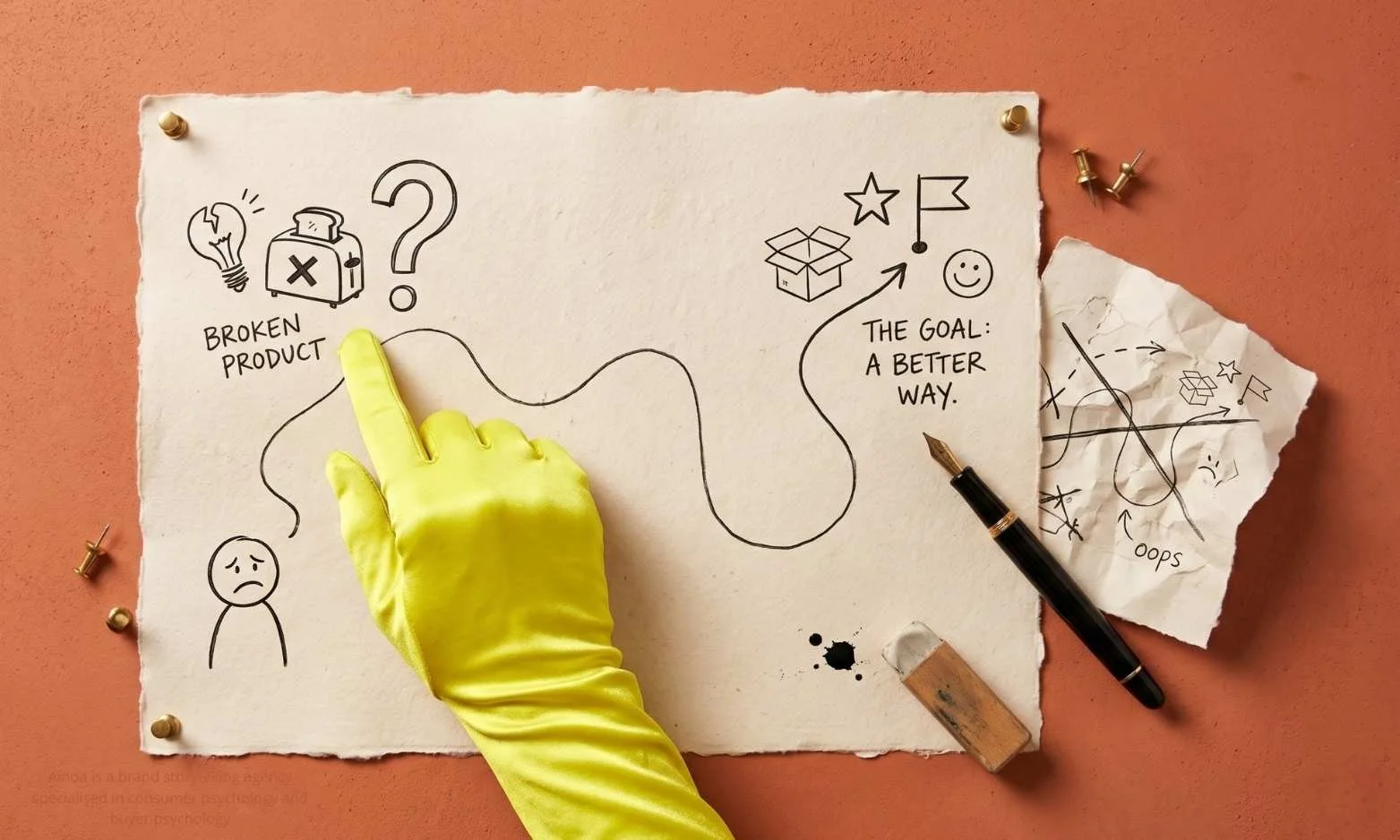
Brand storytelling plays a huge role in branding.
FAQ: How to Build a Brand
What is the most important part of building a brand?
Strategy, specifically your positioning decision. You have to clarify who your brand serves, what you stand for, and what makes you genuinely different. Everything else in brand-building is derived from or supported by this foundation. The most common reason brands do not work is not that the design is bad; it is that the strategic foundation was never properly established.
How long does it take to build a brand?
Setting the strategic foundation and developing an initial identity typically takes between four and twelve weeks, depending on scope and complexity. Building a brand in the market — developing the associations and trust that make it commercially powerful — is a longer project, measured in years of consistent execution. The design sprint is the beginning, not the end.
Can I build a brand without a professional agency?
You can do significant brand-building work internally, particularly the strategic thinking. The limitations of doing all of it in-house are the same as with a brand audit: familiarity bias and the absence of comparative reference points. If the strategic thinking is solid, working with a designer who can translate it into identity is valuable. If the strategic thinking is not yet solid, working with a brand strategy partner before engaging a designer will save significant time and money in the medium term.
What is the difference between a brand and a logo?
A logo is one element of a brand's visual identity — the identifying mark. A brand is the complete set of associations a person holds about a business: what they expect, how they feel, what they believe choosing it says about them. The logo is the cue that triggers those associations. The brand is the associations themselves.